Camino Primitivo from Lugo in 6 days: stage-by-stage itinerary
The Primitivo is the oldest Camino: the one King Alfonso II walked from Oviedo in the 9th century. From Lugo, with its Roman walls, about 100 km remain to Santiago in 5 stages. The first two days are quiet with few people; at Melide it joins the Camino Francés and the atmosphere changes completely. With one more day, Santiago at a gentle pace.
The Primitive Way is the oldest of all: the route King Alfonso II walked from Oviedo in the 9th century. From Lugo, a city ringed by a World Heritage Roman wall, about 100 km remain, exactly what the Compostela requires.
The first two days are quiet with few services; at Melide it joins the French Way and the pilgrim atmosphere multiplies. The plan follows the classic stages to Santiago in 5 days.
With public hostels and the pilgrim menu, a day costs about €35–50. Here’s what everything costs, how to handle the first days with few services, what to pack and how to get your Compostela.
The essentials
Best time
May, June and September: good weather and fewer people. July and August are hot with full albergues; many close in winter.
Distance
About 100 km from Lugo: exactly what the Compostela requires.
How many days
5 days of walking; 6 with a day in Santiago.
Difficulty
Moderate: the first stretch is quiet but has few services, and the second stage is long.
Credencial
The pilgrim passport. It costs at most €2 and you get it from parishes, albergues and Camino associations.
Compostela
Free at the Pilgrim Office if you walk at least 100 km (200 by bike) with two stamps a day.
Waymarks
Yellow arrows and stone markers with the scallop shell and the kilometres left. It’s hard to get lost.
Documents
ID card or passport: every albergue asks for it.
Water
There are fountains along the way, but not all are drinkable (a sign says so). Always carry 1 litre.
Budget per person per day
Budget€35–50Public albergue (about €10), breakfast, pilgrim menu and some groceries.
Mid-range€60–90Private albergue or shared guesthouse, set menus and backpack transfer.
Comfortable€120 or moreBooked rural hotels or guesthouses and your backpack carried every day.
Per person per day, not counting travel to the start. Estimated at 2026 prices. In Galicia the Camino is among the cheapest trips in Spain.
When to go: month-by-month weather
Jan12°5°12
Feb13°6°10
Mar14°6°12
Apr17°8°11
May19°10°9
Jun22°13°7
Jul25°15°3
Aug26°15°3
Sep23°13°6
Oct19°11°11
Nov14°8°13
Dec13°6°13
Average high and low and rainy days per month over the last 10 years. (Open-Meteo)
Day 1 Lugo → San Román da Retorta
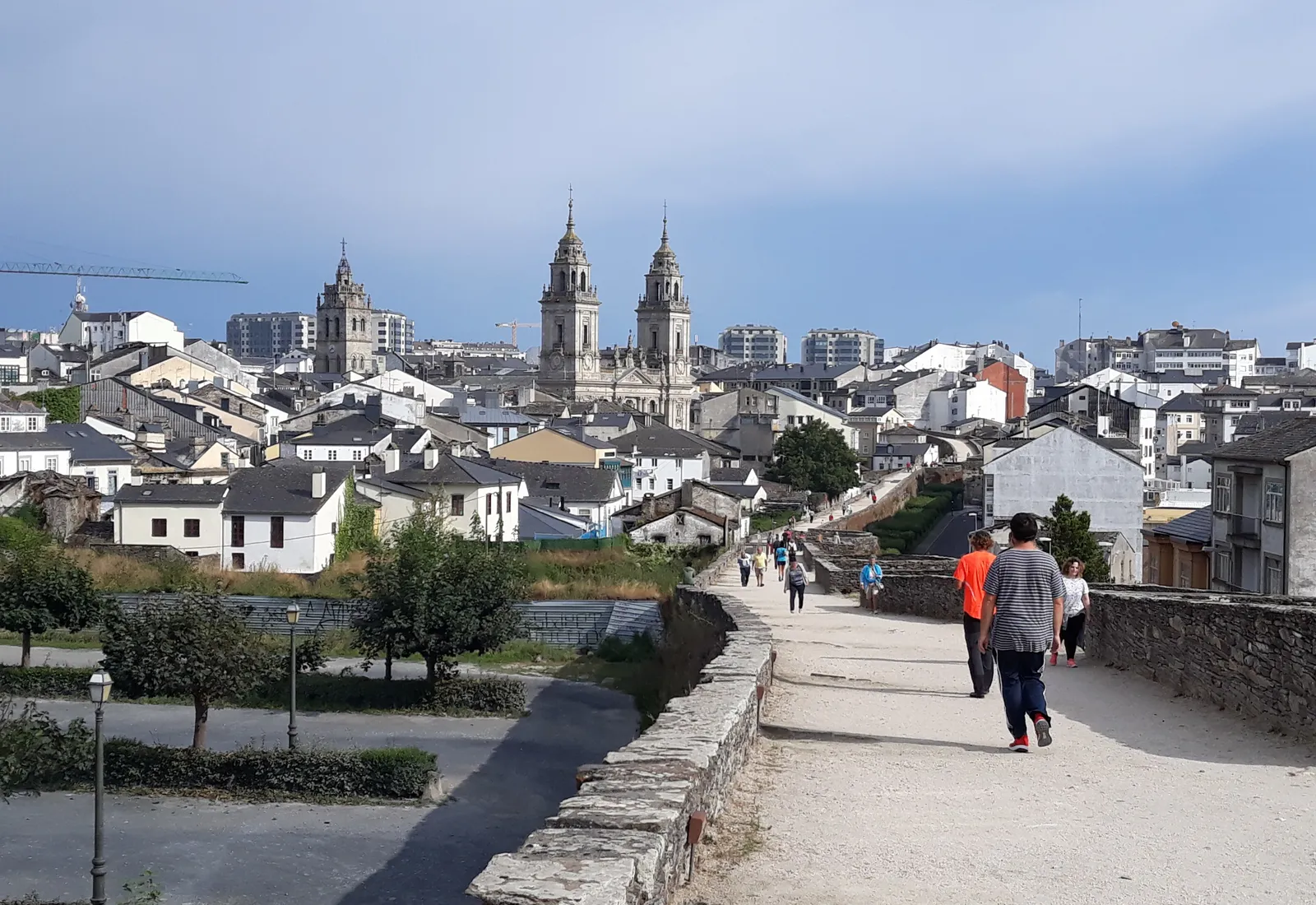
Leave through the Roman walls of Lugo into the Galician countryside.
Before you leave, walk on Lugo's Roman walls, a World Heritage Site: you can go all the way round on top.
Price: FreeTime needed: 5 hours
Getting there, hours and tips
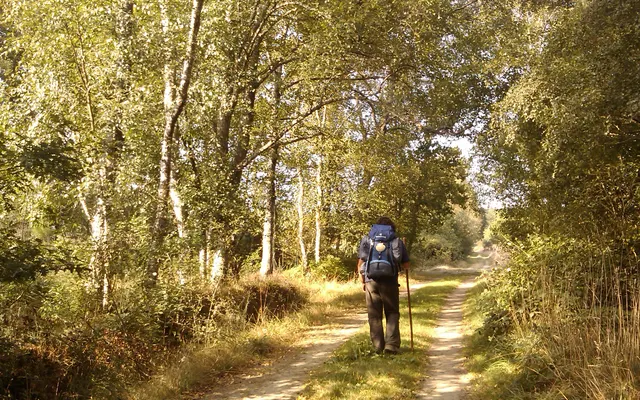
It leaves Lugo through the Santiago Gate of the Roman wall and crosses the Miño on the Roman bridge. Then quiet tracks through meadows with very few services: carry water and food.
Best time: Walk the Lugo wall first: 2 km along the top, free.
Tip: About 5 hours. Before leaving, walk on the Roman walls (free) and get a stamp at the cathedral. The stage follows farm tracks through hamlets with few bars: carry water and food.
≈ 13:355 min walk
Lunch in San Román
Food · 1 h 15 min
A small hamlet: an afternoon to rest.
Getting there, hours and tips
Where to eat: A tiny hamlet: there’s an albergue and almost nothing else. Bring food from Lugo or ask at the albergue.
≈ 14:555 min walk
Rest after the stage
Activity · 2 h 30 min
Shower, laundry and a nap: public hostels usually open around 13:00.
Price: Free
Getting there, hours and tips
Tip: Hang your laundry as soon as you arrive: the afternoon sun dries it for the next day.
20:005 min walk
Pilgrim's dinner in San Román
Food · 1 h 30 min
Getting there, hours and tips
Where to eat: Some private albergues nearby cook dinner for pilgrims: book it when you book your bed.
Day 2 San Román → Melide
A long, solitary stage to Melide, where the Primitivo joins the Camino Francés.
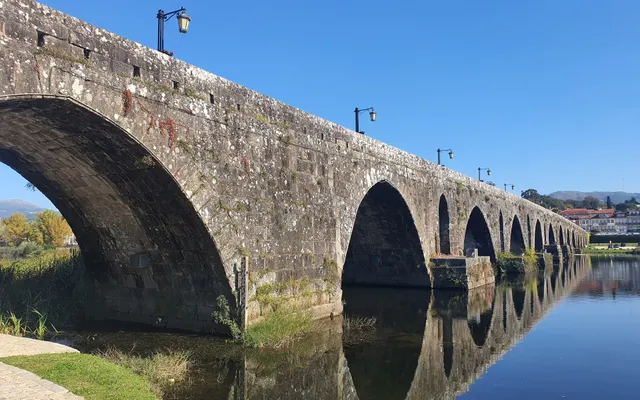
You cross the medieval Ponte Ferreira bridge. In Melide you meet the crowds of the Camino Francés.
Price: FreeTime needed: 7 hours
Getting there, hours and tips
A long stage through hamlets and woods via Ponte Ferreira, with its medieval bridge, ending in Melide, where the Primitive Way joins the French Way. Celebrate with pulpo á feira.
Tip: About 7 hours, the longest. It passes Ponte Ferreira with its medieval bridge and reaches Melide, where the Primitivo joins the Camino Francés and suddenly there are far more people.
≈ 14:055 min walk
Octopus in Melide
Food · 1 h 15 min
Melide is famous for pulpo á feira: at long shared tables, with bread and wine.
Getting there, hours and tips
Where to eat: Melide is the capital of pulpo á feira: the Ezequiel and A Garnacha pulperías are the best known. It comes on a wooden plate with bread and wine in a ceramic cup, at long shared tables. A portion costs about €12–16.
≈ 15:255 min walk
Rest after the stage
Activity · 2 h 30 min
Shower, laundry and a nap: public hostels usually open around 13:00.
Price: Free
Getting there, hours and tips
Tip: Hang your laundry as soon as you arrive: the afternoon sun dries it for the next day.
20:305 min walk
Pilgrim's dinner in Melide
Food · 1 h 30 min
Getting there, hours and tips
Where to eat: Try melindres and ricos, Melide’s sweets, at any bakery.
Day 3 Melide → Arzúa
A short stage between rivers and woods, now on the Camino Francés.
Short ups and downs across rivers: a good stage to rest your legs.
Price: FreeTime needed: 3.5 hours
Getting there, hours and tips
A short stage, now with French Way crowds, through woods and streams. Arzúa is protected-origin cheese country: perfect for a restful afternoon.
Tip: About 3½ hours, the shortest: a break after the long stage. Lovely woodland and the River Iso at Ribadiso, with an albergue by the bridge.
≈ 13:005 min walk
Lunch in Arzúa
Food · 1 h 15 min
Order Arzúa-Ulloa cheese, which comes from here: with quince paste.
Getting there, hours and tips
Where to eat: Arzúa is cheese country: ask for Arzúa-Ulloa (creamy, with protected origin) with quince jelly. The bars on the main street serve pilgrim menus.
≈ 14:205 min walk
Rest after the stage
Activity · 2 h 30 min
Shower, laundry and a nap: public hostels usually open around 13:00.
Price: Free
Getting there, hours and tips
Tip: Hang your laundry as soon as you arrive: the afternoon sun dries it for the next day.
20:305 min walk
Pilgrim's dinner in Arzúa
Food · 1 h 30 min
Getting there, hours and tips
Where to eat: Pilgrim menu (about €12–15): Galician broth, meat or fish, dessert, bread and wine. In Arzúa the Francés and the Northern Way meet, so it’s lively.
Lots of hamlets and cafés along the way: a good stage to take slowly.
Price: FreeTime needed: 4.5 hours
Getting there, hours and tips
A quiet stage of eucalyptus and hamlets with bars every few kilometres, the eve of arrival.
Tip: An easy stage of about 4½ hours through eucalyptus woods and hamlets, with bars every few kilometres. O Pedrouzo is the village of the municipality of O Pino: signs may call it Arca.
≈ 13:055 min walk
Lunch in O Pedrouzo
Food · 1 h 15 min
Getting there, hours and tips
Where to eat: A small village geared to pilgrims: several bars with a menú del día along the main road.
≈ 14:255 min walk
Rest after the stage
Activity · 2 h 30 min
Shower, laundry and a nap: public hostels usually open around 13:00.
Price: Free
Getting there, hours and tips
Tip: Hang your laundry as soon as you arrive: the afternoon sun dries it for the next day.
20:305 min walk
Pilgrim's dinner in O Pedrouzo
Food · 1 h 30 min
Get an early night: tomorrow you reach Santiago.
Getting there, hours and tips
Where to eat: The last dinner before Santiago: many groups eat together. Go to bed early: tomorrow you arrive.
Day 5 O Pedrouzo → Santiago
The final stage and the arrival at the Obradoiro square.
Walking into the Obradoiro square after so many kilometres is unforgettable.
Price: FreeTime needed: 5 hours
Getting there, hours and tips
From Monte do Gozo the cathedral towers come into view for the first time; then it’s downhill into the city to the Obradoiro.
Best time: Leave early to arrive before 12:00.
Tip: About 5 hours. You pass the airport and climb Monte do Gozo, where you first see the cathedral towers. Leave early to reach the Obradoiro before the 12:00 Mass.
≈ 12:055 min walk
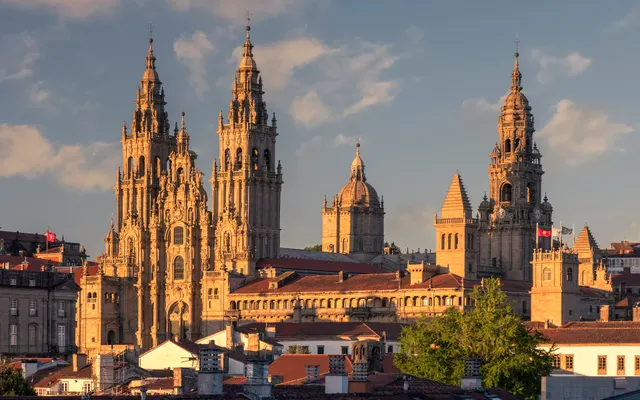
Santiago de Compostela Cathedral
Sight · 1 h
Hug the statue of the apostle and visit the crypt. Check the pilgrims' mass times.
Price: Entering the cathedral is free; the Pórtico de la Gloria, the museum and the rooftops need separate ticketsTime needed: 1 hour
Photo, getting there and tips
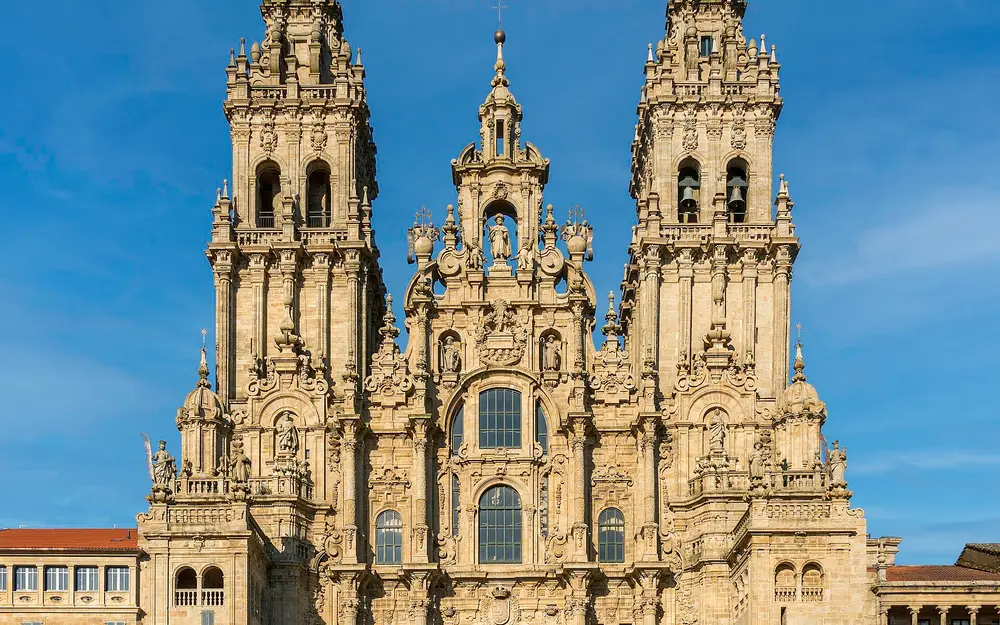
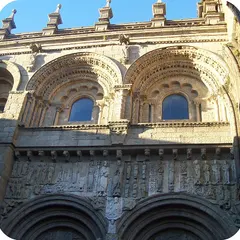
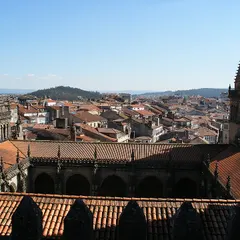
The end of the Camino: the Romanesque cathedral where tradition places the tomb of St James, with the baroque Obradoiro façade and Master Mateo’s Portico of Glory. Inside you embrace the statue of the apostle and visit the crypt.
Best time: Early for the embrace and the crypt; at 12:00 for the pilgrims’ Mass.
Hours: Open daily from early morning; the pilgrims’ Mass is at 12:00, with another at 19:30.
Tip: Enter from the Obradoiro square, hug the statue of the apostle and visit the crypt (queues are shortest early on). The botafumeiro doesn’t swing at every Mass: only on special days or when someone pays for it; check the calendar on the cathedral website. Big backpacks aren’t allowed inside.
Where to eat: The street of bars and sharing plates, next to the Obradoiro: octopus, peppers, empanada and house wine. The parallel streets (Raíña, Troia) are a bit cheaper.
≈ 14:3510 min walk
Pilgrim's Office
Activity · 1 h
Collect your Compostela here with your stamped credencial.
Price: The Compostela is free; the optional distance certificate costs a few eurosTime needed: 15 minutes to 2 hours, depending on crowds
Getting there, hours and tips
Where you collect your Compostela with your stamped credential. On arrival you scan a QR code, fill in the form on your phone and get a number: you can go and eat and come back when it’s your turn.
Hours: Every day 9:00–19:00 (closed 25 December and 1 January).
Tip: It’s at Rúa das Carretas 33, two minutes from the Obradoiro. On arrival you scan a QR code, fill in the form on your phone and get a queue number: so you can go for lunch and come back. Bring your credencial with all the stamps.
Drop your pack at your lodging and shower: tonight you celebrate.
Price: Free
Getting there, hours and tips
Tip: Hang your laundry as soon as you arrive: the afternoon sun dries it for the next day.
19:305 min walk
Pilgrims’ Mass
Activity · 1 h
The day’s arriving pilgrims are named; the botafumeiro swings only on special occasions.
Price: Free
21:005 min walk
Celebration dinner in Santiago
Food · 2 h
You've earned it.
Getting there, hours and tips
Where to eat: To celebrate your arrival: seafood or a shared seafood platter, or a good churrasco. Many pilgrim menus in the old town cost about €12–15. Have tarta de Santiago for dessert.
Day 6 Santiago at a gentle pace
The cathedral rooftops, the market, the Alameda and the old town without a backpack.
Price: About €15, a little less at the reduced rate (pilgrims with a credencial, students, over-65s)
Getting there, hours and tips
Tip: One-hour guided tour across the stone roofs, with views over the Obradoiro and the whole city. There are about 150 steps and places are limited: book on the official website a day or two ahead.
Seafood, cheese and Galician produce. Some stalls will cook what you buy.
Price: Free
Getting there, hours and tips
Hours: Mornings, Monday to Saturday; closed on Sundays.
Tip: Santiago’s second most visited place after the cathedral. Go before 12:00, for the seafood, cheese stalls and the women selling vegetables from their gardens. Some of the market bars will cook what you buy.
≈ 13:005 min walk
Lunch in the old town
Food · 1 h 15 min
Getting there, hours and tips
Where to eat: The menú del día in the old-town bars (about €12–16) is the best value. If you bought seafood at the Abastos, eat it at one of the market’s own bars.
≈ 14:3015 min walk
Alameda Park
Activity · 45 min
The best view of the cathedral, especially at sunset.
Price: Free
Getting there, hours and tips
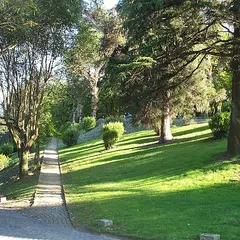
Tip: From the Paseo da Ferradura you get the classic photo of the cathedral through the trees. The colourful statue of the «two Marías» is at the entrance.
≈ 15:3520 min walk
San Domingos de Bonaval
Sight · 1 h
A convent with a triple spiral staircase and the Museum of the Galician People.
Price: The park is free; the Museo do Pobo Galego charges a small fee
Getting there, hours and tips
Tip: The old convent houses the Museo do Pobo Galego, with its triple spiral staircase, and the Pantheon of Illustrious Galicians, where Rosalía de Castro is buried. The park behind is one of the quietest spots in the city.
≈ 16:4510 min walk
Rúa do Vilar and Praza de Praterías
Activity · 45 min
Stone arcades and the cathedral’s oldest façade, with its horse fountain.
Price: Free
≈ 17:355 min walk
Tapas along Rúa da Raíña
Activity · 1 h
Many bars serve a free tapa with each glass of wine, as tradition dictates.
Price: A glass of wine with a tapa, €2–3
21:005 min walk
Dinner in Santiago
Food · 2 h
Getting there, hours and tips
Where to eat: Last dinner: sharing plates on Rúa do Franco or Rúa da Raíña, or tapas and wine in the bars near the market. At night student «tunas» sing around the old town.
Times marked ≈ are estimates: they count how long each plan takes and the journey between them, just like the app.
How much this plan costs
€15per person
Cathedral rooftops: €15
Standard adult ticket (the EU-resident price where it differs) for the essentials of each stop, without optional extras (lifts, domes…), food or transport.
How much the whole trip costs
Budget
Mid-range
Comfort
Accommodation (6 nights)
€60–90
€150–240
€420 or more
Food (breakfast, sandwich and pilgrim menu)
€120–168
€180–240
€300 or more
Backpack transfer
€0
€30–48
€48 or more
Extras (laundry, stamps, coffee)
€18–30
€30–48
€48 or more
Total per person
€198–288
€390–576
€816 or more
Per person, 6 days on the ground. Flights not included. Budget: Xunta public hostels (€10) or cheap private ones, breakfast, a sandwich and the pilgrim menu, carrying your own pack. Mid-range: private hostel or guesthouse sharing a room, set menus and backpack transfer. Excludes travel to the start and back from Santiago.
Pilgrim menuStarter, main, dessert, bread and wine or water for about €12–15. Served early, from 19:00.
Pulpo á feiraBoiled octopus with olive oil, salt and paprika on a wooden plate. Melide’s is the most famous.
Caldo gallegoBroth of turnip greens, potato, beans and a little meat. Perfect after a day walking in the rain.
Empanada gallegaGalician pie with tuna, meat or scallops. Great to carry in your backpack.
Tetilla and Arzúa-Ulloa cheeseMild, creamy Galician cheeses with protected origin. With quince jelly for dessert.
Tarta de SantiagoAlmond cake with the cross of Saint James in icing sugar. The arrival dessert.
Many bars open very early for pilgrims: the usual breakfast is coffee with toast or sponge cake.
Small hamlets don’t always take cards: carry some cash.
Pilgrim dinners are served early (19:00–20:00) because albergues close around 22:00.
Money and payments
CashAlways carry cash: many hamlets have no ATM and some bars and hostels don’t take cards.
HostelsXunta public hostels cost €10 a night, can’t be booked and open around 13:00. Private ones cost about €12–20 and can be booked.
Pilgrim menuStarter, main, dessert, bread and wine or water for about €12–15, from 19:00 in almost every stage town.
BackpackCorreos and private companies move your pack between lodgings for about €4–8 per stage (Correos also sells whole-route rates). It doesn’t affect the Compostela.
CompostelaFree at the Pilgrim’s Office. The optional distance certificate costs a few euros.
Before you go
CredentialThe pilgrim «passport»: €2 at most, from parishes, hostels, tourist offices and Camino associations (also at the start). Without it, no public hostel and no Compostela.
StampsFor the Compostela you need two stamps a day over the last 100 km: at the start and end of each stage (bars, churches, hostels). The final stretch into Santiago must be on foot.
TrainingWalk 10–15 km on several days in the weeks before, in the same boots with a loaded pack: blisters are the top reason people quit.
BookingsIn July, August and Easter, book private hostels or guesthouses ahead: beds run out.
Documents and healthID or passport (every hostel asks) and your European Health Insurance Card if you’re from the EU. 112 works along the whole Camino.
What to pack
A 30–40 litre pack weighing no more than 10% of your body weight.
Boots or trail shoes already broken in.
Seamless socks (two or three pairs) and petroleum jelly for your feet.
A rain jacket or poncho: it rains in Galicia in every season.
Two changes of quick-dry technical clothing.
Sandals or flip-flops for the evening and showers.
A light sleeping bag or liner for the hostels.
A foot first-aid kit: blister plasters, needle and thread, anti-inflammatories.
A head torch for pre-dawn starts.
A cap and sunscreen, even in spring.
Apps that save the trip
Buen CaminoThe pilgrims’ favourite app: stages, hostels with phone numbers and services in each village.
GronzeThe reference website for every hostel, its prices and each stage’s profile.
Correos (El Camino con Correos)To book backpack transfer or post home what you don’t need.
Google MapsFor bars, pharmacies and finding your lodging on arrival.
YoutopiaThis stage-by-stage plan with a map, who’s booking each night and the group’s expenses, on everyone’s phone.
2027: Holy Year25 July 2027 falls on a Sunday, so 2027 is a Compostela Holy Year: the cathedral’s Holy Door opens and record numbers of pilgrims are expected. Book very early.
24 and 25 JulyThe Apostle’s feast in Santiago: fireworks in the Obradoiro on the night of the 24th and a solemn Mass with the botafumeiro on the 25th.
Easter and bank holidaysVery busy: public hostels fill up early.
May, June and SeptemberThe best time: good weather, atmosphere and free beds.
July and AugustHeat and full hostels: set off before dawn.
November to MarchFew pilgrims and quite a few hostels closed: call ahead.
Travelling as a group
Walk at your own pace and meet at a bar halfway and at the finish: nobody gets pushed too hard.
For groups of 5 or more, book a private albergue or a house: public ones can’t be booked.
Backpack transfer is cheaper per person if several of you go to the same place.
Carry a shared first-aid kit: blister plasters, needle and thread, anti-inflammatories and Vaseline.
Note in Youtopia who booked each night and the shared costs of dinners and beds.
Take the group photo at the 100 km marker and at the Obradoiro: nobody wants to miss those two.
Day trips
Lugo’s Roman walls
In the city
If you arrive a day early: the only Roman wall still complete, about 2 km long and a World Heritage Site. In the evening, free tapas with your drink on Rúa Nova.
About 100 km, usually in 5 stages of 14 to 28 km. Exactly what the Compostela requires.
Why is it called the Camino Primitivo?
Because it’s the first one on record: King Alfonso II of Asturias walked it from Oviedo in the 9th century to visit the apostle’s tomb.
What do you need for the Compostela?
Walk at least 100 continuous km on a recognised Camino, ending in Santiago, with your credencial stamped (two stamps a day: at the start and end of the stage). You collect it free at the Pilgrim Office.
Where do I get the credencial?
From parishes, albergues, tourist offices and Friends of the Camino associations, including at the starting point. It costs at most €2. If you’re travelling from abroad, you can order one from an association in your country.
Do I need to book the albergues?
The public Xunta albergues (about €10 a night) can’t be booked: beds go first come, first served and they open around 13:00. Private ones (about €12–20) and guesthouses can, and in July and August it’s wise to book.
Can I walk without carrying my backpack?
Yes. Correos (the Spanish post) and private companies take your bag from one place to the next for about €5–8 per stage. Leave it in the morning with a label showing the destination. It makes no difference to the Compostela.
What should I pack?
Very little: two sets of technical clothing, seamless socks, a rain jacket, sandals for the afternoon, a light sleeping bag or sheet for albergues, a head torch, a foot first-aid kit and sunscreen.
Is the Camino safe?
Yes, it’s a busy, well-marked route and you usually walk alongside other pilgrims. Save the emergency number (112) and tell someone your route if you walk alone in low season.


 Ourense2 days · from 2 to 3

 What kind of travel buddy are you?7 questions, 6 traveller types. Take it and send it to your group.Take the quiz
 Porto3 days · from 2 to 4
 Lisbon3 days · from 2 to 5
 Madrid3 days · from 2 to 5
 Seville3 days · from 2 to 4
 Málaga3 days · from 2 to 4
 Alicante3 days · from 2 to 4
 Benidorm3 days · from 2 to 4