Portuguese Camino from Porto in 12 days: stages and albergues
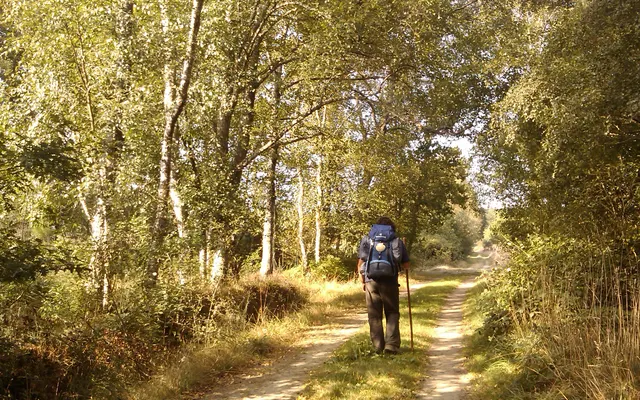
From Porto the Portuguese Way is about 240 km to Santiago: 5 stages through northern Portugal (Barcelos, Ponte de Lima and the Labruja climb) to the border at Tui and 6 more through Galicia. A full two-week Camino, cheaper than the Spanish ones and far less crowded than the Francés.
🇵🇹 Portuguese Way, Portugal and Spain12 days69 plansFree
The Portuguese Camino from Porto is the way to walk the whole Portuguese route: about 240 km in 11 stages, 5 through northern Portugal and 6 through Galicia from Tui. It’s the second most walked Camino, but far quieter than the Francés and noticeably cheaper on the Portuguese side.
The plan follows the central route: leaving Porto, Barcelos and its rooster, Ponte de Lima and its bridge over the River Lima, the Labruja climb (the only hard one), the Valença fortress and the entry into Spain at Tui. From there, the classic stages via Redondela, Pontevedra, Caldas de Reis and Padrón to the Obradoiro.
With albergues and pilgrim menus, a day costs about €30–45. Here’s what everything costs in Portugal and in Spain, how to get to Porto, what to pack and how to get your Compostela.
The essentials
Best time
May, June and September. July and August are hot in Portugal and albergues fill up; from November to March many close.
Distance
About 240 km on the central route: 120 in Portugal and 119 in Spain.
How many days
11 days of walking; 12 with a day in Santiago; 13 if you split the 34 km stage.
Difficulty
Moderate: two stages over 25 km at the start, Barcelos to Ponte de Lima (34 km) and the Labruja climb. The rest is gentle.
Credencial
Available at Porto Cathedral (the Sé) and from albergues and associations. It costs at most €2.
Compostela
Free at the Pilgrim Office. Walking from Porto you easily cover the 100 km; over the last 100, two stamps a day.
Time zone
Portugal is one hour behind Spain: put your watch forward when you cross into Tui.
Waymarks
Yellow arrows all the way. In Portugal there are also blue arrows: those go to Fátima, the other way.
Water
Always carry 1 litre and refill at cafés: there are no fountains on the Labruja climb.
Budget per person per day
Budget€30–45Municipal albergues (€8–12 in Portugal, €10 in Galicia), breakfast, a sandwich and the pilgrim menu.
Mid-range€55–85Private albergue or shared guesthouse, set menus and backpack transfer.
Comfortable€110 or moreBooked rural houses and hotels, with your pack carried every day.
Per person per day, excluding travel to Porto and back. Estimated at 2026 prices. The Portuguese half is usually a little cheaper than the Galician one.
When to go: month-by-month weather
Jan13°6°11
Feb15°7°10
Mar16°7°12
Apr18°10°11
May21°12°9
Jun23°15°7
Jul26°17°3
Aug27°17°3
Sep24°15°7
Oct21°13°12
Nov16°10°14
Dec14°7°14
Average high and low and rainy days per month over the last 10 years. (Open-Meteo)
Day 1 Porto → Vilarinho
Leave Porto Cathedral heading north through Maia to the village of Vilarinho.
The first 10 km are city streets: many do them by metro to Maia.
Price: FreeTime needed: 6–7 hours
Photo, getting there and tips
You leave Porto Cathedral (the Sé) and cross the city northwards through Maia and Moreira. It’s the least pretty stage: lots of tarmac and industrial estates until you reach the hamlets around Vilarinho.
Best time: Get your credencial and first stamp at the Sé the day before.
Tip: About 6–7 hours. To skip the urban exit, many pilgrims take the metro to Maia and start walking from there. Watch out for the Portuguese cobbles: they are hard on the feet.
≈ 14:355 min walk
Lunch in Vilarinho
Food · 1 h 15 min
Getting there, hours and tips
Where to eat: Village cafés and restaurants with a «prato do dia» (dish of the day) for about €8–12.
≈ 15:555 min walk
Rest after the stage
Activity · 2 h 30 min
Shower, laundry and a nap. Hang your washing as soon as you arrive.
Price: Free
Getting there, hours and tips
Tip: Hang your laundry as soon as you arrive: the afternoon sun dries it for the next day.
19:305 min walk
Pilgrim’s dinner in Vilarinho
Food · 1 h 30 min
Getting there, hours and tips
Where to eat: Order caldo verde (kale and potato soup with chouriço) and a jug of vinho verde.
Day 2 Vilarinho → Barcelos
The medieval Zameiro bridge, the Romanesque church at Rates and arrival in Barcelos, the town of the rooster.
Halfway, the Romanesque church of São Pedro de Rates: a good place for a stamp.
Price: FreeTime needed: 6–7 hours
Photo, getting there and tips
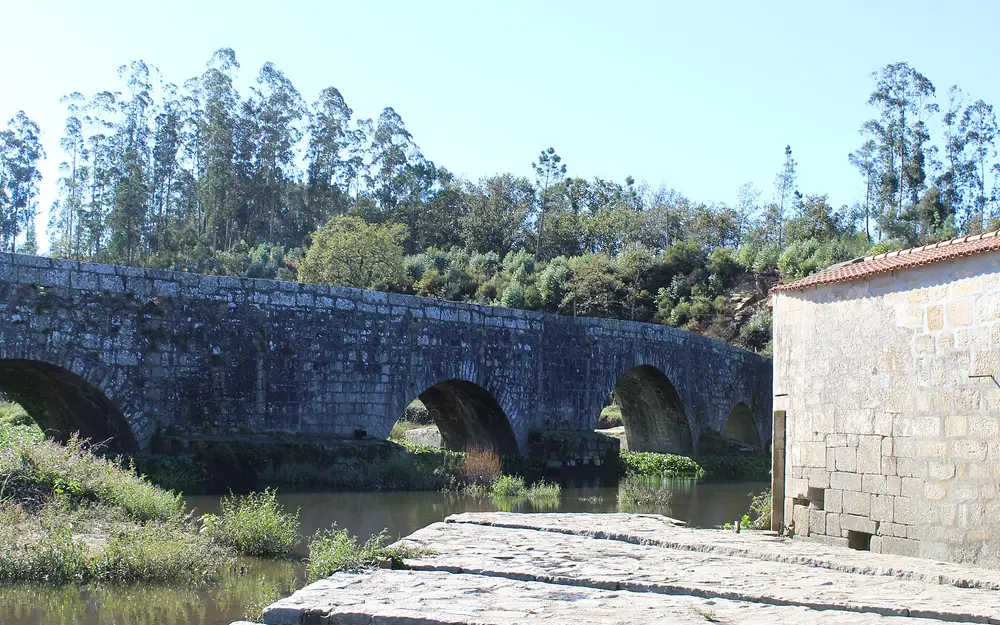
You cross the River Ave on the medieval Zameiro bridge and continue through hamlets and woods to São Pedro de Rates and its Romanesque church. Then Pedra Furada and the arrival in Barcelos over the bridge on the Cávado.
Tip: About 6–7 hours. Get a stamp at the Rates church. If you arrive on a Thursday, Barcelos holds one of the biggest weekly markets in Portugal.
≈ 14:055 min walk
Lunch in Barcelos
Food · 1 h 15 min
Getting there, hours and tips
Where to eat: Salt cod in any of its forms and the «prato do dia» in the town-centre taverns.
≈ 15:3010 min walk
Medieval bridge and Paço dos Condes
Sight · 45 min
The palace ruins are a free open-air museum.
Price: FreeTime needed: 45 minutes
Photo, getting there and tips
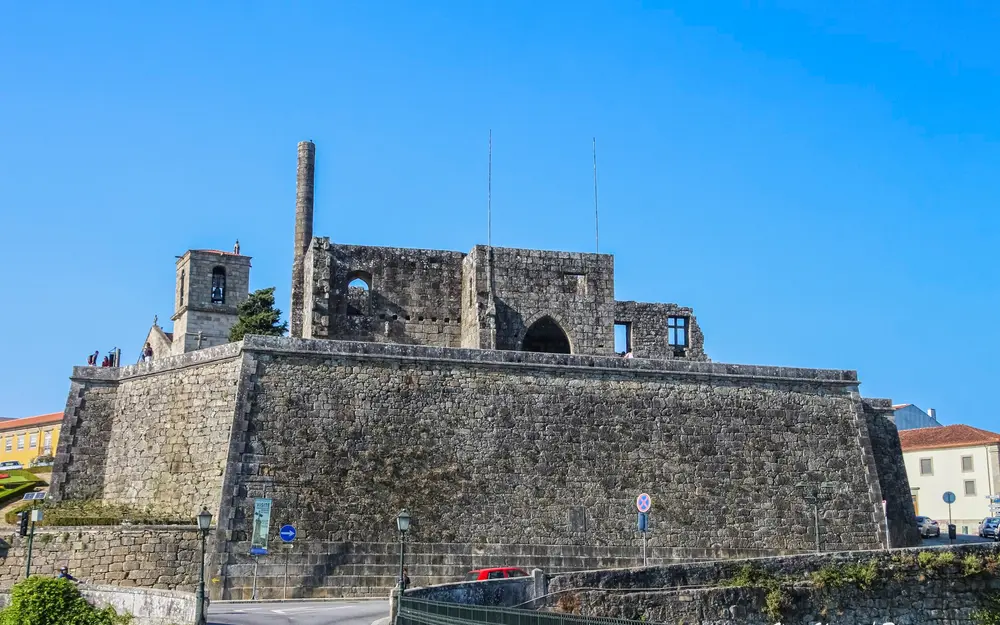
The 14th-century bridge over the Cávado and the ruins of the Counts of Barcelos’ palace, now an open-air museum. From here you see the whole town above the river.
Tip: The ruined counts’ palace is a free open-air archaeological museum next to the Gothic bridge. This is where the legend of the Barcelos rooster comes from: a wrongly accused pilgrim saved by a roast cockerel that started to crow.
≈ 16:2510 min walk
Rest after the stage
Activity · 2 h 30 min
Shower, laundry and a nap. Hang your washing as soon as you arrive.
Price: Free
Getting there, hours and tips
Tip: Hang your laundry as soon as you arrive: the afternoon sun dries it for the next day.
19:305 min walk
Pilgrim’s dinner in Barcelos
Food · 1 h 30 min
Getting there, hours and tips
Where to eat: Pilgrim menu for about €10–13 in the restaurants near the albergue.
Day 3 Barcelos → Ponte de Lima
The longest stage: hamlets, vinho verde vineyards and the great bridge of Ponte de Lima.
If it’s too long, stop in Balugães or Vitorino dos Piães and split it in two.
Price: FreeTime needed: 8 hours
Photo, getting there and tips
The longest stage: hamlets, vinho verde vines on pergolas, small woods and the entry into Ponte de Lima along the river. Few climbs, but the kilometres take their toll.
Best time: Leave in the dark with a head torch to arrive before the heat.
Tip: About 8 hours. Start before 7:00 and stop for breakfast halfway. If you’d rather split it, there are albergues in Balugães and Vitorino dos Piães (about 20–22 km in).
≈ 15:055 min walk
Lunch in Ponte de Lima
Food · 1 h 15 min
Getting there, hours and tips
Where to eat: The local dish is arroz de sarrabulho, a rich rice and pork stew. With local vinho verde.
≈ 16:255 min walk
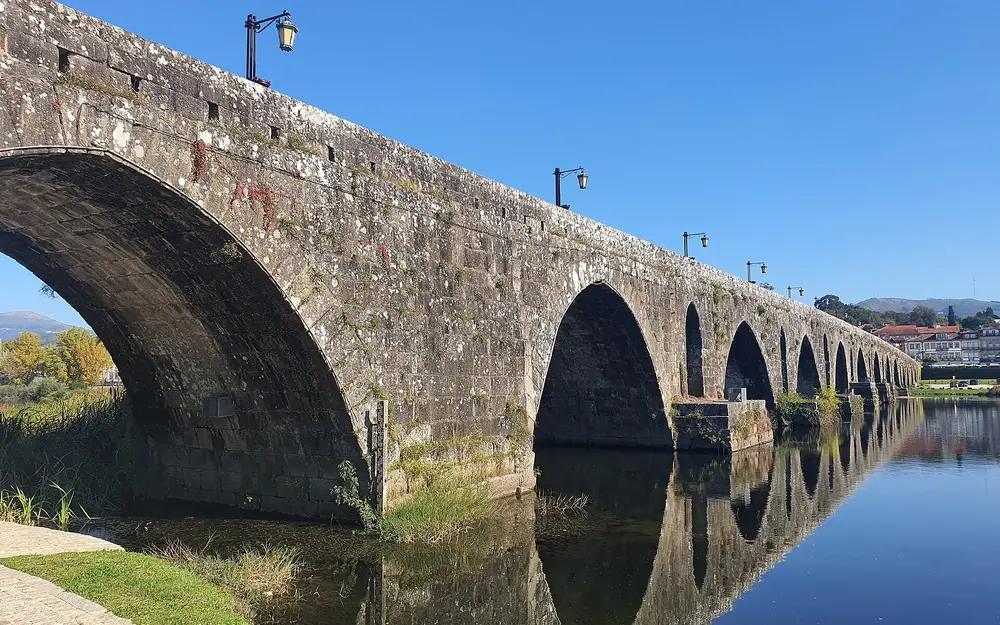
Ponte de Lima medieval bridge
Sight · 40 min
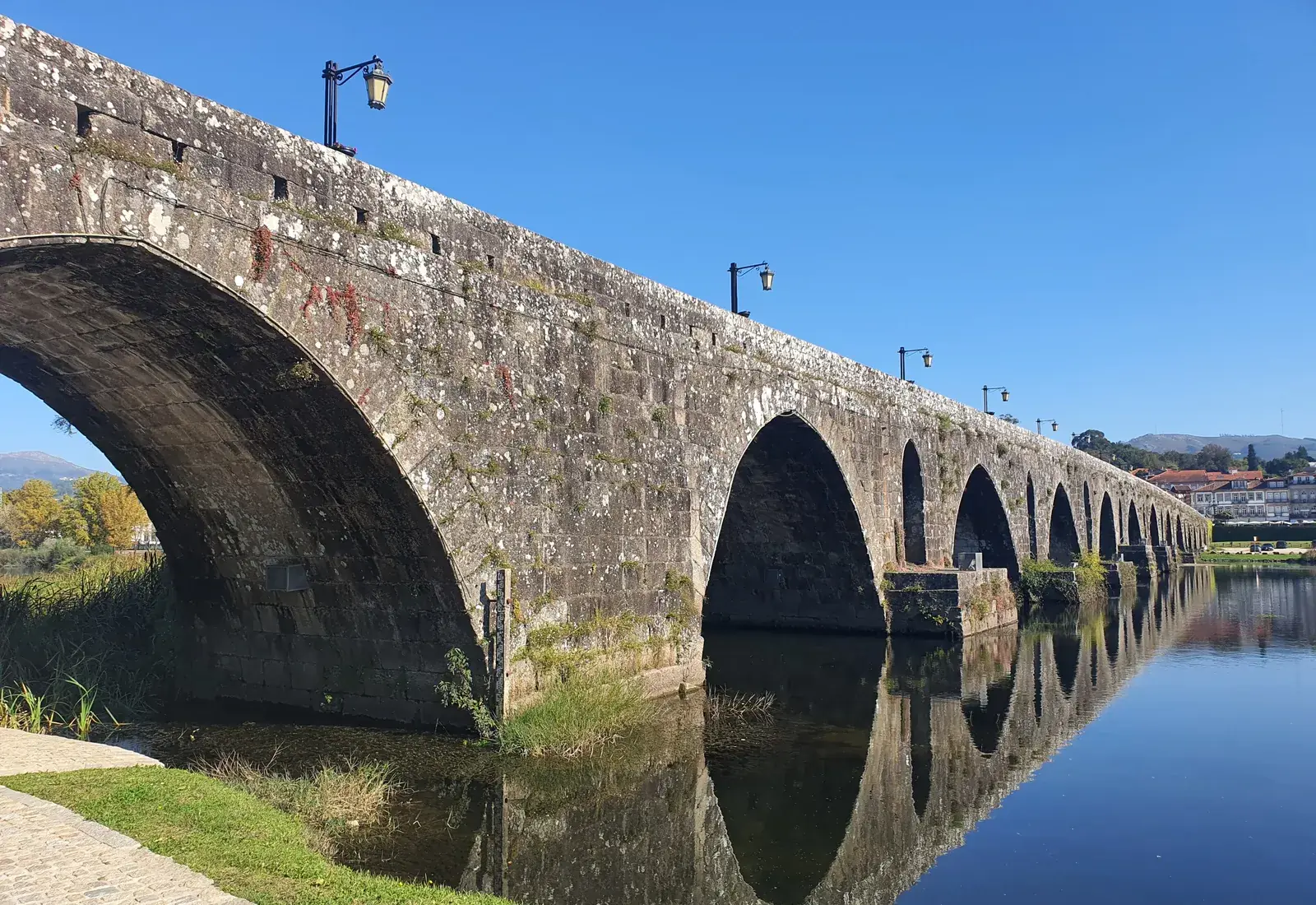
Over 300 metres of Roman and medieval bridge across the River Lima.
Price: FreeTime needed: 40 minutes
Photo, getting there and tips
A long stone-arched bridge, part Roman and part medieval, over the River Lima. The Romans called it the river of forgetfulness: it was said whoever crossed it lost their memory.
Best time: At sunset.
Tip: Cross the bridge at sunset and look back at the town from the far bank. Ponte de Lima claims to be the oldest town in Portugal (charter of 1125).
≈ 17:105 min walk
Rest after the stage
Activity · 2 h 30 min
Shower, laundry and a nap. Hang your washing as soon as you arrive.
Price: Free
Getting there, hours and tips
Tip: Hang your laundry as soon as you arrive: the afternoon sun dries it for the next day.
19:305 min walk
Pilgrim’s dinner in Ponte de Lima
Food · 1 h 30 min
Getting there, hours and tips
Where to eat: Riverside terraces with pilgrim menus. Get an early night: tomorrow is the Labruja climb.
Day 4 Ponte de Lima → Rubiães
A short stage but with the hardest climb of the route: the Labruja hills.
At the top is the Cruz dos Franceses, covered in pilgrims’ crosses. Carry water for the climb.
Price: FreeTime needed: 5 hours
Photo, getting there and tips
A short stage with the toughest climb of the Portuguese Way: the Labruja hills, about 400 metres up a rocky path. At the top is the Cruz dos Franceses, covered in crosses left by pilgrims.
Best time: In the morning, while it’s cool.
Tip: About 5 hours. Fill up with water in Labruja before the climb: there is nothing at the top. In the rain the path is slippery, take it slowly.
≈ 13:055 min walk
Lunch in Rubiães
Food · 1 h 15 min
Getting there, hours and tips
Where to eat: Few, simple places: around the albergue there are a couple of restaurants with a dish of the day.
≈ 14:255 min walk
Romanesque church of Rubiães
Sight · 20 min
A 13th-century church right on the Camino.
Price: Free
Getting there, hours and tips
Tip: A 13th-century Romanesque church right on the Camino, with carved corbels. Often closed: admire it from outside.
≈ 14:505 min walk
Rest after the stage
Activity · 2 h 30 min
Shower, laundry and a nap. Hang your washing as soon as you arrive.
Price: Free
Getting there, hours and tips
Tip: Hang your laundry as soon as you arrive: the afternoon sun dries it for the next day.
19:305 min walk
Pilgrim’s dinner in Rubiães
Food · 1 h 30 min
Getting there, hours and tips
Where to eat: An early dinner at the albergue or the restaurant next door: tomorrow you cross into Spain.
Day 5 Rubiães → Tui
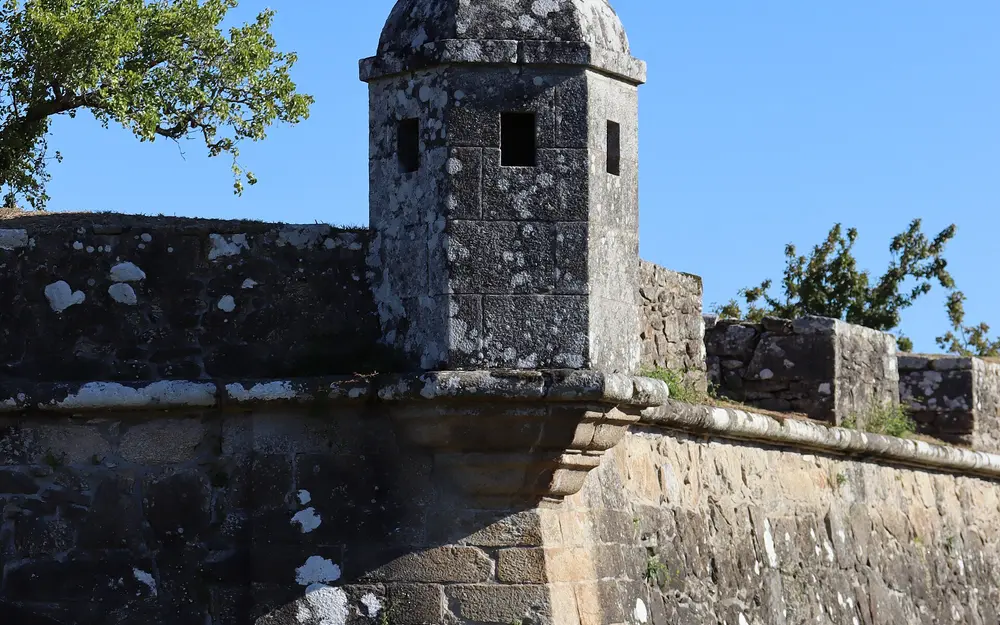
The Valença fortress, the bridge over the Miño and into Spain at Tui.
Walk through the Valença fortress and cross the international bridge: on the other side, clocks go forward an hour.
Price: FreeTime needed: 5 hours
Photo, getting there and tips
A gentle descent through woods to Valença, the walled town with star-shaped ramparts. You cross the Miño on the iron international bridge and climb into Tui’s old town, now in Galicia.
Tip: About 5 hours. Take a stroll inside the Valença fortress (free). When you cross the bridge, put your watch forward an hour.
≈ 13:055 min walk
Lunch in Tui
Food · 1 h 15 min
Getting there, hours and tips
Where to eat: Bars in the old town and on the Alameda. Your first meal in Galicia: octopus, empanada and Albariño.
≈ 14:255 min walk
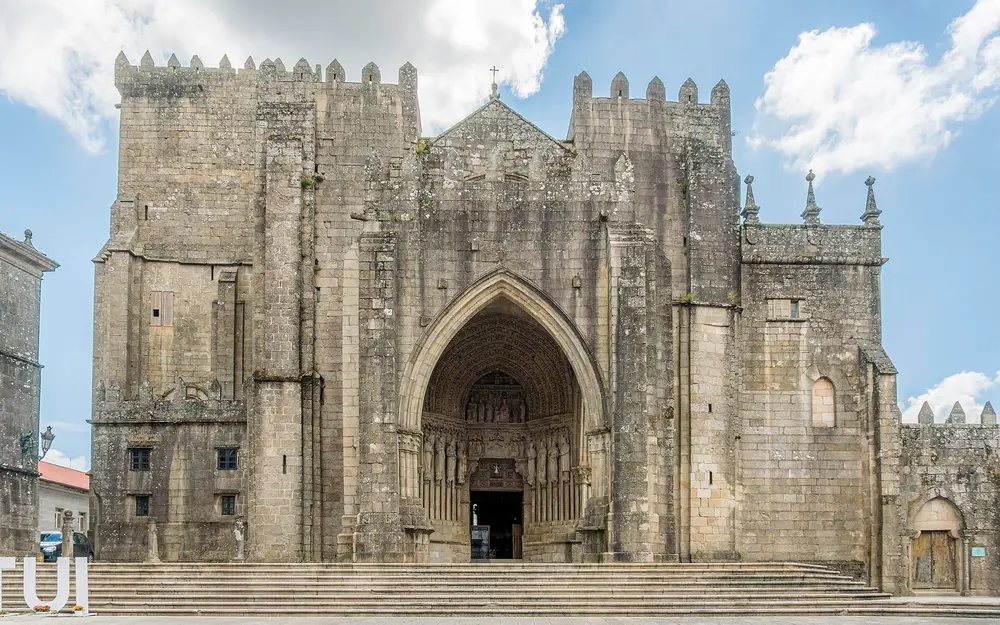
Tui Cathedral
Sight · 1 h
A 12th–13th-century fortress cathedral with a cloister and views of the Miño.
Price: €4 with audio guideTime needed: 1 hour
Photo, getting there and tips
Tui cathedral looks like a castle: it was built to defend the border. It has one of the first Gothic portals in Iberia and a cloister overlooking the river.
Tip: A 12th–13th-century fortress cathedral with battlements, a cloister and views over the Miño into Portugal. They stamp credenciales here too.
Before you set off, get a stamp at Tui cathedral. A detour through the As Gándaras woods avoids the industrial estate.
Price: FreeTime needed: 4 hours
Getting there, hours and tips
It leaves from Tui’s fortress-cathedral and follows the Louro river through woods. Before O Porriño there’s a variant that avoids the industrial estate by keeping to the river: worth it.
Best time: Get your stamp at Tui cathedral before leaving.
Tip: About 4 hours. Get a stamp at Tui cathedral before setting off. Take the signposted detour through the As Gándaras woods and river: it avoids the industrial estate and is far prettier.
≈ 13:005 min walk
Lunch in O Porriño
Food · 1 h 15 min
Getting there, hours and tips
Where to eat: Bars in the centre and on the main street with a menú del día. A non-touristy town: everyday prices.
≈ 14:205 min walk
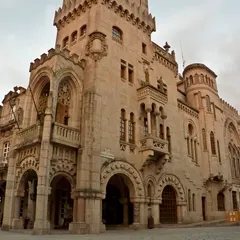
O Porriño Town Hall
Sight · 20 min
Designed by Antonio Palacios, the Madrid architect born here.
Price: Free
Getting there, hours and tips
Tip: The castle-like town hall was designed by Antonio Palacios, architect of Madrid’s Cibeles Palace, who was born here.
≈ 14:455 min walk
Rest after the stage
Activity · 2 h 30 min
Shower, laundry and a nap: public hostels usually open around 13:00.
Price: Free
Getting there, hours and tips
Tip: Hang your laundry as soon as you arrive: the afternoon sun dries it for the next day.
20:005 min walk
Pilgrim's dinner in O Porriño
Food · 1 h 30 min
Getting there, hours and tips
Where to eat: Pilgrim menu near the albergue. First night: check your feet and pack for an early start.
Day 7 O Porriño → Redondela
A short stage with a climb at Mos and the descent to the viaducts of Redondela.
The steep climb comes after Mos; then it is all downhill to the estuary.
Price: FreeTime needed: 4 hours
Getting there, hours and tips
The stage with the only hard climb of the route, up to Mos with its manor house and chapel. Then down towards the Vigo estuary to Redondela, the town of the railway viaducts.
Tip: About 4 hours. The climb at Mos is the hardest on the Spanish part of the Portuguese Way, but short. Coming down into Redondela you get your first view of the Vigo estuary.
≈ 13:005 min walk
Lunch in Redondela
Food · 1 h 15 min
Getting there, hours and tips
Where to eat: Redondela is cuttlefish town: order chocos (cuttlefish) in their ink or fried, the local speciality.
≈ 14:2510 min walk
Redondela viaducts
Sight · 30 min
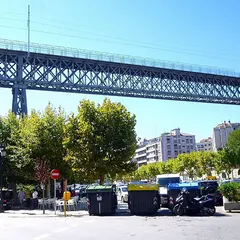
Two 19th-century railway viaducts cross the town above the houses.
Price: Free
Getting there, hours and tips
Tip: Two 19th-century railway viaducts cross high above the town. From the Alameda you can see both.
≈ 15:0510 min walk
San Simón cove
Activity · 45 min
The calm estuary by the town, facing San Simón island.
Price: Free
≈ 15:555 min walk
Rest after the stage
Activity · 2 h 30 min
Shower, laundry and a nap: public hostels usually open around 13:00.
Price: Free
Getting there, hours and tips
Tip: Hang your laundry as soon as you arrive: the afternoon sun dries it for the next day.
20:005 min walk
Pilgrim's dinner in Redondela
Food · 1 h 30 min
Getting there, hours and tips
Where to eat: The Coastal Way joins the central route here, so the town-centre bars are lively.
Day 8 Redondela → Pontevedra
Along the Vigo estuary, the Ponte Sampaio bridge and the arrival in Pontevedra.
At Arcade you cross the medieval Ponte Sampaio bridge. Arcade is famous for its oysters.
Price: FreeTime needed: 5 hours
Getting there, hours and tips
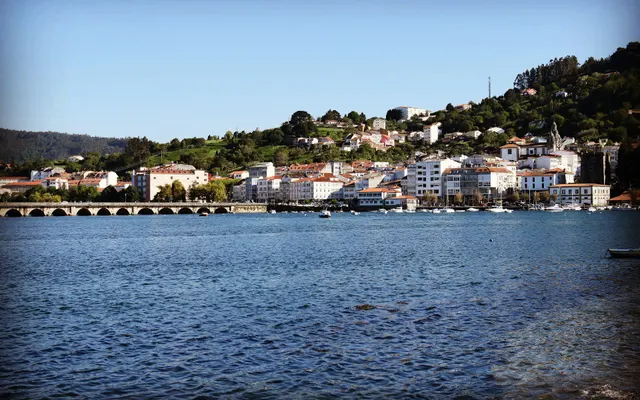
One of the loveliest stages: it skirts the Vigo estuary, passes Arcade (famous for its oysters) and crosses the medieval Ponte Sampaio bridge. It ends in Pontevedra, with its scallop-shaped Pilgrim Virgin sanctuary.
Tip: About 5 hours, with estuary views at Arcade, famous for its oysters, and the medieval bridge of Ponte Sampaio.
≈ 13:055 min walk
Lunch in Pontevedra
Food · 1 h 15 min
Getting there, hours and tips
Where to eat: The old-town squares (da Leña, da Verdura, do Teucro) are full of bars with sharing plates and set menus. A good place for octopus and Albariño wine.
≈ 14:255 min walk
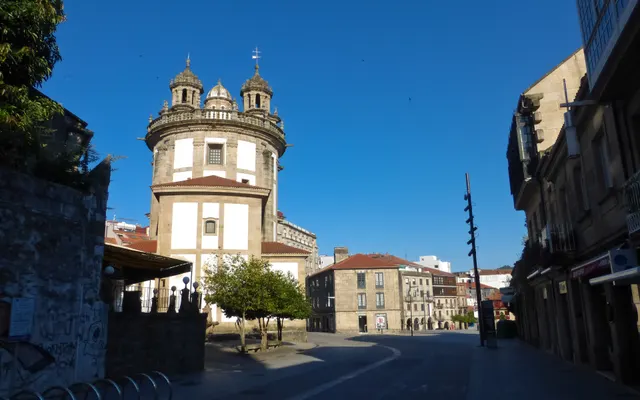
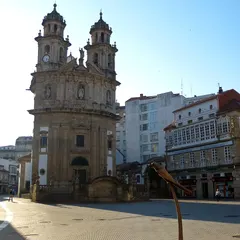
Sanctuary of the Pilgrim Virgin
Sight · 20 min
A church shaped like a scallop shell, dedicated to the patron saint of the Portuguese Way.
Price: Free
Getting there, hours and tips
Tip: 18th-century church with a scallop-shaped floor plan: the symbol of Pontevedra and of the Portuguese Way. They stamp credenciales inside.
≈ 14:505 min walk
Pontevedra old town
Activity · 1 h
Car-free and full of stone squares: perfect for tapas.
Price: Free
Getting there, hours and tips
Tip: One of the best-preserved old towns in Galicia, entirely pedestrianised. Stroll in the afternoon and stop at the Santo Domingo ruins and Santa María basilica.
One of the prettiest stages: mostly tracks between woods and vineyards.
Price: FreeTime needed: 5 hours
Getting there, hours and tips
A calm, almost flat stage through vineyards, woods and hamlets. Caldas de Reis is a spa town: at the hot spring in the centre pilgrims soak their tired feet.
Tip: About 5 hours through woods and vineyards, almost flat. Few bars in the middle section: carry water.
≈ 13:055 min walk
Lunch in Caldas de Reis
Food · 1 h 15 min
Getting there, hours and tips
Where to eat: A spa town with bars by the River Umia. Order empanada or peppers.
≈ 14:255 min walk
Thermal foot bath
Activity · 30 min
There is public thermal water in the centre: pilgrims rest their feet in it.
Price: Free
Getting there, hours and tips
Tip: At the As Burgas fountain in the centre, the water comes out hot (about 40 °C) and pilgrims soak their feet after the stage. Free and the best cure for tired legs.
≈ 15:005 min walk
Caldas botanical garden
Activity · 45 min
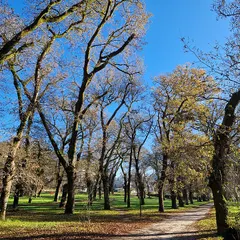
A garden of century-old oaks and plane trees by the River Umia.
Price: Free
≈ 15:505 min walk
Rest after the stage
Activity · 2 h 30 min
Shower, laundry and a nap: public hostels usually open around 13:00.
Price: Free
Getting there, hours and tips
Tip: Hang your laundry as soon as you arrive: the afternoon sun dries it for the next day.
20:005 min walk
Pilgrim's dinner in Caldas de Reis
Food · 1 h 30 min
Getting there, hours and tips
Where to eat: Pilgrim menu. Some of the town’s spas have an afternoon thermal circuit if you fancy a treat.
Day 10 Caldas de Reis → Padrón
Quiet valleys to Padrón, where tradition says the boat carrying the apostle arrived.
An easy stage through the Bermaña valley and oak woods.
Price: FreeTime needed: 4.5 hours
Getting there, hours and tips
Woods and streams to Padrón, where tradition says the apostle’s body arrived by boat: under the altar of the Santiago church is the «pedrón», the stone it was moored to. And this is where Padrón peppers come from.
Tip: About 4½ hours, mostly through woods. You enter Padrón along the Espolón promenade by the River Sar.
≈ 13:055 min walk
Padrón peppers
Food · 1 h 15 min
This is the place to order them: "some are hot and some are not".
Getting there, hours and tips
Where to eat: «Some are hot, some are not». The real ones come from nearby Herbón, in season May to October. On Sundays there’s a market by the river.
≈ 14:255 min walk
Church of Santiago, Padrón
Sight · 30 min
Under the altar is the "pedrón", the stone the apostle's boat was moored to.
Price: Free
Getting there, hours and tips
Tip: Under the altar is the «pedrón», the Roman stone where, by tradition, the boat carrying the apostle’s body was moored. It gives the town its name.
≈ 15:005 min walk
Espolón promenade
Activity · 45 min
The plane-tree promenade by the River Sar where, legend says, the apostle’s boat arrived.
Price: Free
≈ 15:505 min walk
Rest after the stage
Activity · 2 h 30 min
Shower, laundry and a nap: public hostels usually open around 13:00.
Price: Free
Getting there, hours and tips
Tip: Hang your laundry as soon as you arrive: the afternoon sun dries it for the next day.
20:005 min walk
Pilgrim's dinner in Padrón
Food · 1 h 30 min
Getting there, hours and tips
Where to eat: Peppers, octopus and the pilgrim menu. Last night before Santiago: raise a glass to tomorrow.
Day 11 Padrón → Santiago
The final stage and the arrival at the Obradoiro square.
Walking into the Obradoiro square after so many kilometres is unforgettable.
Price: FreeTime needed: 6 hours
Getting there, hours and tips
The last stage passes the A Escravitude sanctuary and enters Santiago from the south, until the cathedral towers appear and you reach the Obradoiro.
Best time: Leave very early to arrive before 12:00.
Tip: About 6 hours, the longest. It passes the A Escravitude sanctuary and the last kilometres are urban. Leave early to make the 12:00 Mass.
≈ 13:055 min walk
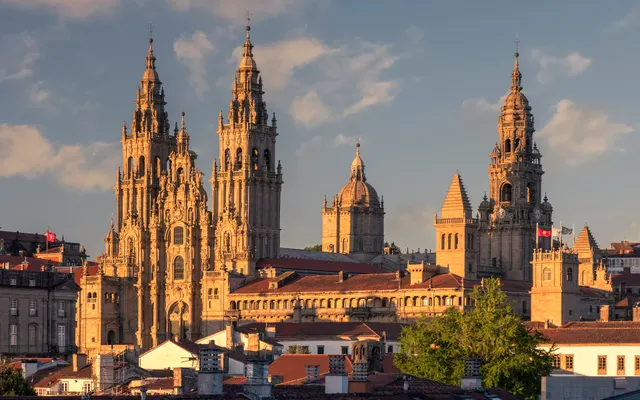
Santiago de Compostela Cathedral
Sight · 1 h
Hug the statue of the apostle and visit the crypt. Check the pilgrims' mass times.
Price: Entering the cathedral is free; the Pórtico de la Gloria, the museum and the rooftops need separate ticketsTime needed: 1 hour
Photo, getting there and tips
The end of the Camino: the Romanesque cathedral where tradition places the tomb of St James, with the baroque Obradoiro façade and Master Mateo’s Portico of Glory. Inside you embrace the statue of the apostle and visit the crypt.
Best time: Early for the embrace and the crypt; at 12:00 for the pilgrims’ Mass.
Hours: Open daily from early morning; the pilgrims’ Mass is at 12:00, with another at 19:30.
Tip: Enter from the Obradoiro square, hug the statue of the apostle and visit the crypt (queues are shortest early on). The botafumeiro doesn’t swing at every Mass: only on special days or when someone pays for it; check the calendar on the cathedral website. Big backpacks aren’t allowed inside.
Where to eat: The street of bars and sharing plates, next to the Obradoiro: octopus, peppers, empanada and house wine. The parallel streets (Raíña, Troia) are a bit cheaper.
≈ 15:3510 min walk
Pilgrim's Office
Activity · 1 h
Collect your Compostela here with your stamped credencial.
Price: The Compostela is free; the optional distance certificate costs a few eurosTime needed: 15 minutes to 2 hours, depending on crowds
Getting there, hours and tips
Where you collect your Compostela with your stamped credential. On arrival you scan a QR code, fill in the form on your phone and get a number: you can go and eat and come back when it’s your turn.
Hours: Every day 9:00–19:00 (closed 25 December and 1 January).
Tip: It’s at Rúa das Carretas 33, two minutes from the Obradoiro. On arrival you scan a QR code, fill in the form on your phone and get a queue number: so you can go for lunch and come back. Bring your credencial with all the stamps.
Drop your pack at your lodging and shower: tonight you celebrate.
Price: Free
Getting there, hours and tips
Tip: Hang your laundry as soon as you arrive: the afternoon sun dries it for the next day.
19:305 min walk
Pilgrims’ Mass
Activity · 1 h
The day’s arriving pilgrims are named; the botafumeiro swings only on special occasions.
Price: Free
21:005 min walk
Celebration dinner in Santiago
Food · 2 h
You've earned it.
Getting there, hours and tips
Where to eat: To celebrate your arrival: seafood or a shared seafood platter, or a good churrasco. Many pilgrim menus in the old town cost about €12–15. Have tarta de Santiago for dessert.
Day 12 Santiago at a gentle pace
The cathedral rooftops, the market, the Alameda and the old town without a backpack.
Price: About €15, a little less at the reduced rate (pilgrims with a credencial, students, over-65s)
Getting there, hours and tips
Tip: One-hour guided tour across the stone roofs, with views over the Obradoiro and the whole city. There are about 150 steps and places are limited: book on the official website a day or two ahead.
Seafood, cheese and Galician produce. Some stalls will cook what you buy.
Price: Free
Getting there, hours and tips
Hours: Mornings, Monday to Saturday; closed on Sundays.
Tip: Santiago’s second most visited place after the cathedral. Go before 12:00, for the seafood, cheese stalls and the women selling vegetables from their gardens. Some of the market bars will cook what you buy.
≈ 13:005 min walk
Lunch in the old town
Food · 1 h 15 min
Getting there, hours and tips
Where to eat: The menú del día in the old-town bars (about €12–16) is the best value. If you bought seafood at the Abastos, eat it at one of the market’s own bars.
≈ 14:3015 min walk
Alameda Park
Activity · 45 min
The best view of the cathedral, especially at sunset.
Price: Free
Getting there, hours and tips
Tip: From the Paseo da Ferradura you get the classic photo of the cathedral through the trees. The colourful statue of the «two Marías» is at the entrance.
≈ 15:3520 min walk
San Domingos de Bonaval
Sight · 1 h
A convent with a triple spiral staircase and the Museum of the Galician People.
Price: The park is free; the Museo do Pobo Galego charges a small fee
Getting there, hours and tips
Tip: The old convent houses the Museo do Pobo Galego, with its triple spiral staircase, and the Pantheon of Illustrious Galicians, where Rosalía de Castro is buried. The park behind is one of the quietest spots in the city.
≈ 16:4510 min walk
Rúa do Vilar and Praza de Praterías
Activity · 45 min
Stone arcades and the cathedral’s oldest façade, with its horse fountain.
Price: Free
≈ 17:355 min walk
Tapas along Rúa da Raíña
Activity · 1 h
Many bars serve a free tapa with each glass of wine, as tradition dictates.
Price: A glass of wine with a tapa, €2–3
21:005 min walk
Dinner in Santiago
Food · 2 h
Getting there, hours and tips
Where to eat: Last dinner: sharing plates on Rúa do Franco or Rúa da Raíña, or tapas and wine in the bars near the market. At night student «tunas» sing around the old town.
Times marked ≈ are estimates: they count how long each plan takes and the journey between them, just like the app.
How much this plan costs
€19per person
Tui Cathedral: €4
Cathedral rooftops: €15
Standard adult ticket (the EU-resident price where it differs) for the essentials of each stop, without optional extras (lifts, domes…), food or transport.
How much the whole trip costs
Budget
Mid-range
Comfort
Accommodation (12 nights)
€96–144
€300–480
€780 or more
Food (breakfast, sandwich and pilgrim menu)
€216–300
€336–456
€600 or more
Backpack transfer
€0
€60–96
€96 or more
Extras (laundry, stamps, coffee)
€36–60
€60–96
€96 or more
Total per person
€348–504
€756–1,128
€1,572 or more
Per person, 12 days on the ground. Flights not included. Budget: municipal albergues (about €8–12 or donation in Portugal; €10 in Galicia), breakfast, a sandwich and the pilgrim menu, carrying your own pack. Mid-range: private albergue or guesthouse sharing a room, set menus and backpack transfer. Excludes travel to Porto and back from Santiago.
Flights: Porto has direct flights from many cities in Spain and Europe, often cheap (1 h 15 from Madrid). From the airport, the metro (line E) to the centre for about €3. To get home from Santiago there are flights, trains to Madrid and buses to Porto airport.
Direct to Trindade, a 10-minute walk from the cathedral where the Camino starts.
Taxi, Uber or Bolt from Porto airport
about €20–3020–30 min
Shared by 3 or 4 with backpacks it costs about the same as the metro.
Going home: Obradoiro to Santiago airport
bus about €1–3; taxi about €2320–35 min
Bus 6A links central Santiago with the airport every 20–30 minutes.
Back to Porto from Santiago
bus about €15–303–4 h
Direct buses run from Santiago to Porto airport and city centre, handy if your flight home leaves from there.
Getting around
The Camino starts at Porto Cathedral (the Sé): look for the yellow arrows in the street behind it.
There is another option, the Coastal Way, which runs north by the sea via Vila do Conde, Esposende and Viana do Castelo and joins this route at Redondela.
In Portugal there are plenty of albergues but they are more spread out: check where each stage ends before you set off.
Backpack transfer companies cover the whole route; in Spain, the Correos post office does too.
To get home from Santiago there are flights, trains to Vigo, A Coruña and Madrid, and direct buses to Porto.
Where to stay
Porto (Sé and Ribeira)
Best for: The night before
Next to the cathedral where the Camino starts, with the Ribeira five minutes away for a last dinner.
Starting from Porto without any training: the first two stages are over 25 km and the third over 30.
Wearing new boots on the Camino: blisters are the main reason people give up.
Forgetting the one-hour time change at Tui: albergue and restaurant times shift.
Climbing the Labruja without water or food: there is nothing until Rubiães.
Following the blue arrows in Portugal: they lead to Fátima, the opposite way.
Carrying no cash: many cafés in Portuguese hamlets don’t take cards.
Forgetting two stamps a day over the last 100 km (from Tui): no stamps, no Compostela.
Tips
Get your credencial and first stamp at Porto Cathedral (the Sé) the day before you start.
Leaving Porto is long and urban: many pilgrims skip it by taking the metro out to Maia.
The Barcelos to Ponte de Lima stage is over 30 km: if you’re short on legs, split it in two.
Portugal is one hour behind Spain: watch the times when you cross into Tui.
Flights and places to stay
Flights to PortoReturn flights; you pick the dates on Trip.com. Affiliate link: if you book, Youtopia earns a small commission at no extra cost to you.
Find a place to stay in PortoOpens the Booking.com search with the filter already set.
About 240 km on the central route, in 11 stages of 17 to 34 km. The coastal route is a bit longer.
How many days do you need?
11 days of walking plus one to enjoy Santiago. If you split Barcelos to Ponte de Lima, 12 or 13.
Is the central or the coastal route better?
The central route is more direct, with more history and a better albergue network. The coastal one follows the sea with more flat boardwalk, but more wind. They meet at Redondela.
Which is the hardest stage?
Barcelos to Ponte de Lima for the distance (34 km), and Ponte de Lima to Rubiães for the Labruja climb, about 400 metres.
Where do I get the credencial in Porto?
At Porto Cathedral (the Sé), which also gives you the first stamp, and from albergues and Camino associations. It costs at most €2.
How much are albergues in Portugal?
Municipal and parish ones about €8–12 or donation; private ones about €12–20. In Galicia the Xunta public albergues cost €10 and can’t be booked.
What do you need for the Compostela?
Walk at least the last 100 km to Santiago with your credencial stamped; on that stretch, two stamps a day. Starting in Porto you easily cover it. You collect it free at the Pilgrim Office.
Can I walk without carrying my backpack?
Yes: companies carry it from one lodging to the next along the whole route for about €5–8 per stage. It makes no difference to the Compostela.
Do I need to speak Portuguese?
No: Spanish is widely understood on the Camino and many people speak some English. «Obrigado» (thank you) and «bom caminho» open a lot of doors.


 Ourense2 days · from 2 to 3

 What kind of travel buddy are you?7 questions, 6 traveller types. Take it and send it to your group.Take the quiz
 Porto3 days · from 2 to 4
 Lisbon3 days · from 2 to 5
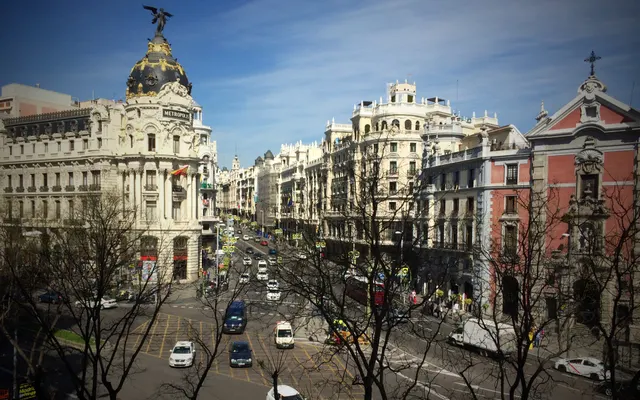 Madrid3 days · from 2 to 5
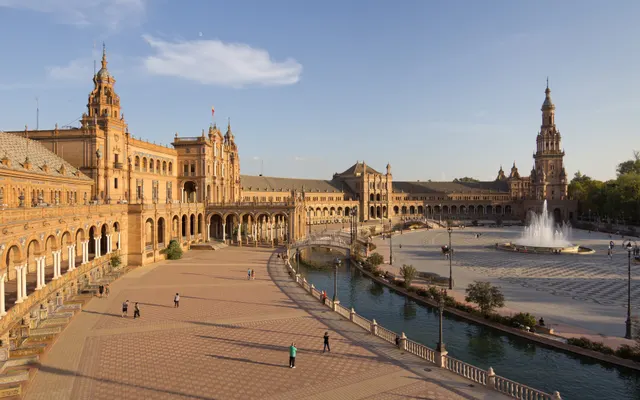 Seville3 days · from 2 to 4
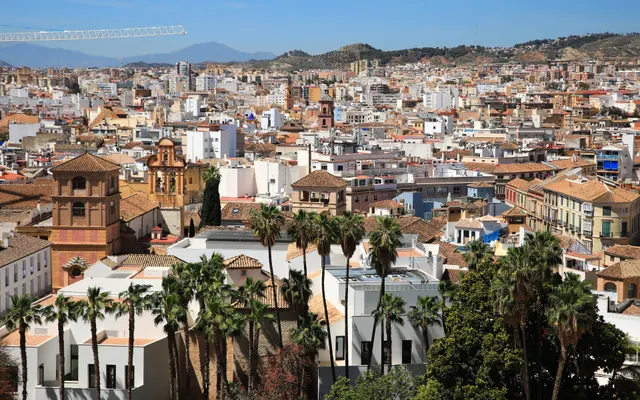 Málaga3 days · from 2 to 4
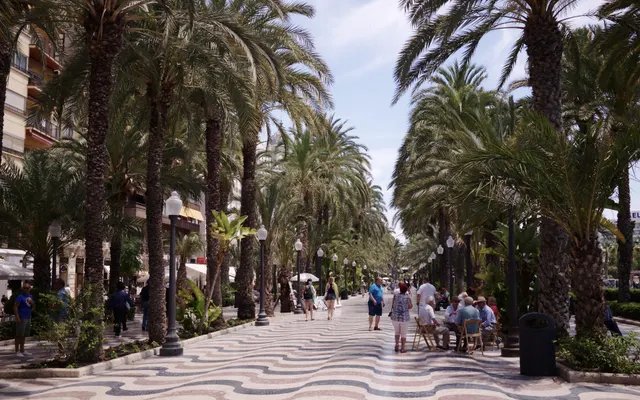 Alicante3 days · from 2 to 4
 Benidorm3 days · from 2 to 4