

Outlander in Scotland: filming locations, a route and how to visit each set
Outlander makes a castle, a village square and a country road feel like doors into another era. But the real route is spread across Scotland, several places stand in for different locations, and the stones of Craigh na Dun don’t exist the way you see them on screen. Here are the locations you can actually visit, the role they played, how to get there and how to spread them over days that aren’t a race.
This guide was checked against the VisitScotland map created with Sony Pictures Television, Historic Environment Scotland and National Trust for Scotland listings, and Hopetoun Estate’s access rules, as of November 17, 2026. Some tour, accommodation and mobile data links are affiliate links; if you book through them, Youtopia may earn a commission at no extra cost to you. Opening hours, permissions and access change: check them directly before your trip.
First things first: real Scotland, fiction and composite sets
The series is based on Diana Gabaldon’s novels and uses Scotland as its visual lead, but the story jumps between countries and eras. Many scenes set in France, the United States or an Inverness of another century were shot in Scottish buildings, streets and landscapes. VisitScotland published a locations guide with Sony Pictures Television covering all eight seasons, a more up-to-date reference than the older maps limited to the early seasons.
The route isn’t one continuous theme park. Some places are monuments with tickets and opening hours; others are open streets, and several are on private estates or were sets that no longer exist. The best visit combines recognizing a scene with the real history of the place. If you’re traveling with friends who haven’t seen the show, the castles, villages and battlefields are still worthwhile in their own right.
There’s one correction that heads off a common disappointment: the Craigh na Dun stone circle, as it appears in Outlander, was a set. Clava Cairns, near Inverness, is a real prehistoric site often linked to the visual inspiration, but it isn’t the set Claire travels through time from. The estate where the set was built isn’t an attraction you should go onto.
Outlander locations worth visiting
1. Falkland: 1940s Inverness
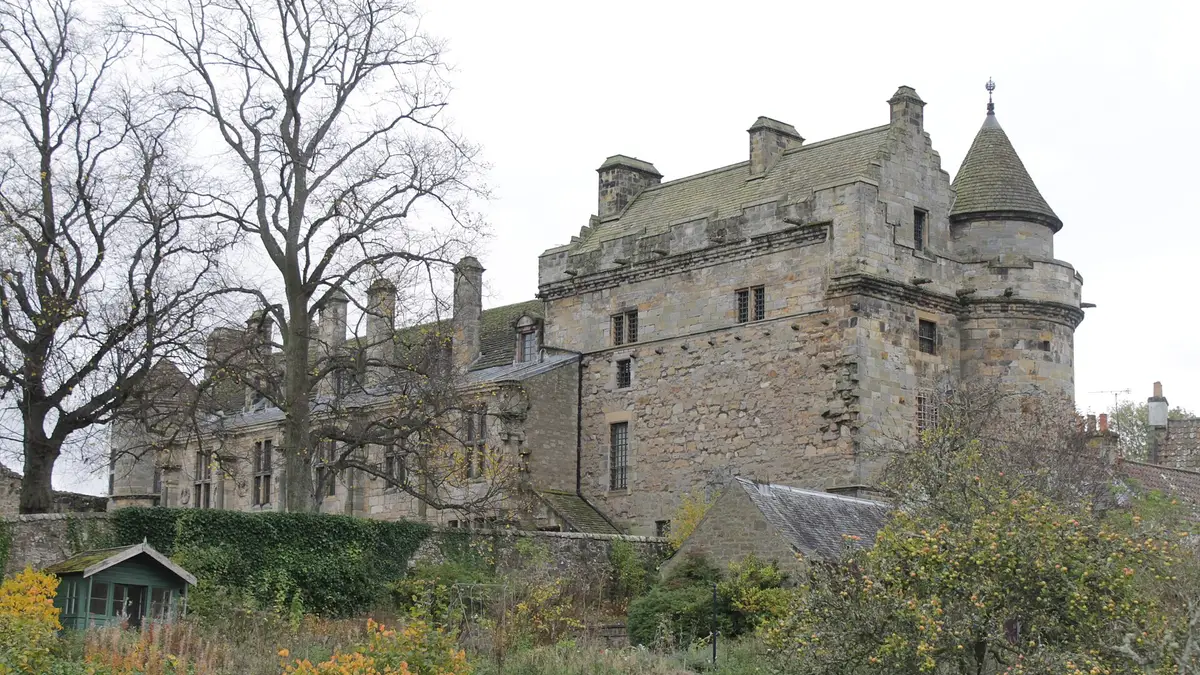
The village of Falkland, in Fife, appears as 1940s Inverness in season one, when Claire and Frank arrive on their trip. You’ll recognize the Bruce Fountain in the square and several facades that were turned into shops and lodgings for the show. The Covenanter Hotel, the pharmacy and today’s shops are part of village life: visit respectfully, buy something if you like and don’t block doorways for a photo.
Falkland Palace was also used in the series. The National Trust for Scotland explains that a cellar became the apothecary in season two and that, after filming, an interpretation inspired by the palace’s real history was set up there. It’s a good example of how a fictional location can open a conversation about a place’s past. Check the palace and garden opening dates before you go.
2. Culross: Cranesmuir and the herb garden
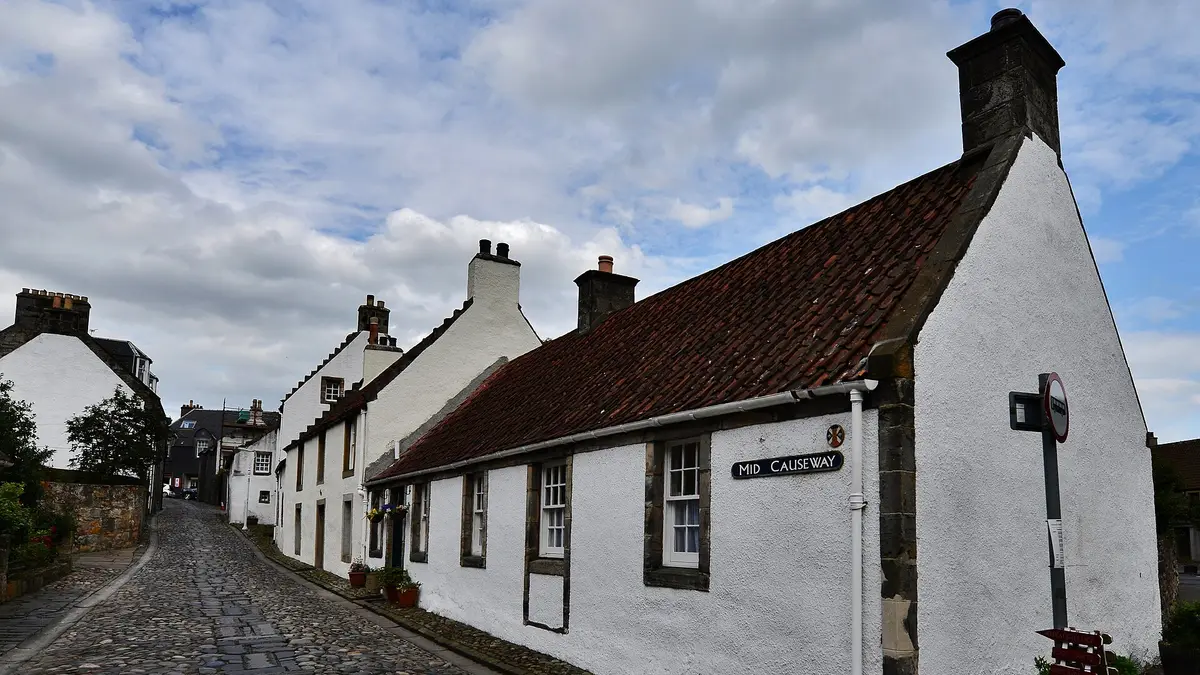
Culross is one of the most recognizable historic villages in Fife. The National Trust for Scotland confirms it appears as Cranesmuir and that the palace, garden and burgh were used in several seasons, including the first, second, fourth and seventh. The Mercat Cross, the cobbled streets and the palace garden give context to Geillis Duncan’s scenes. During filming, some facades were temporarily repainted and later returned to their usual look.
Culross is best enjoyed on foot, but its streets are steep and the surfaces uneven. The palace has stairs and no elevator, according to its accessibility guide; the village also shares its streets with traffic. If someone in the group needs a step-free route, check the Trust’s access document and decide which spaces you’ll be able to visit. It’s a reasonable distance from Edinburgh and Glasgow, but confirm buses and trains so you’re not relying on an uncertain connection home.
3. Doune Castle: Castle Leoch and the MacKenzies
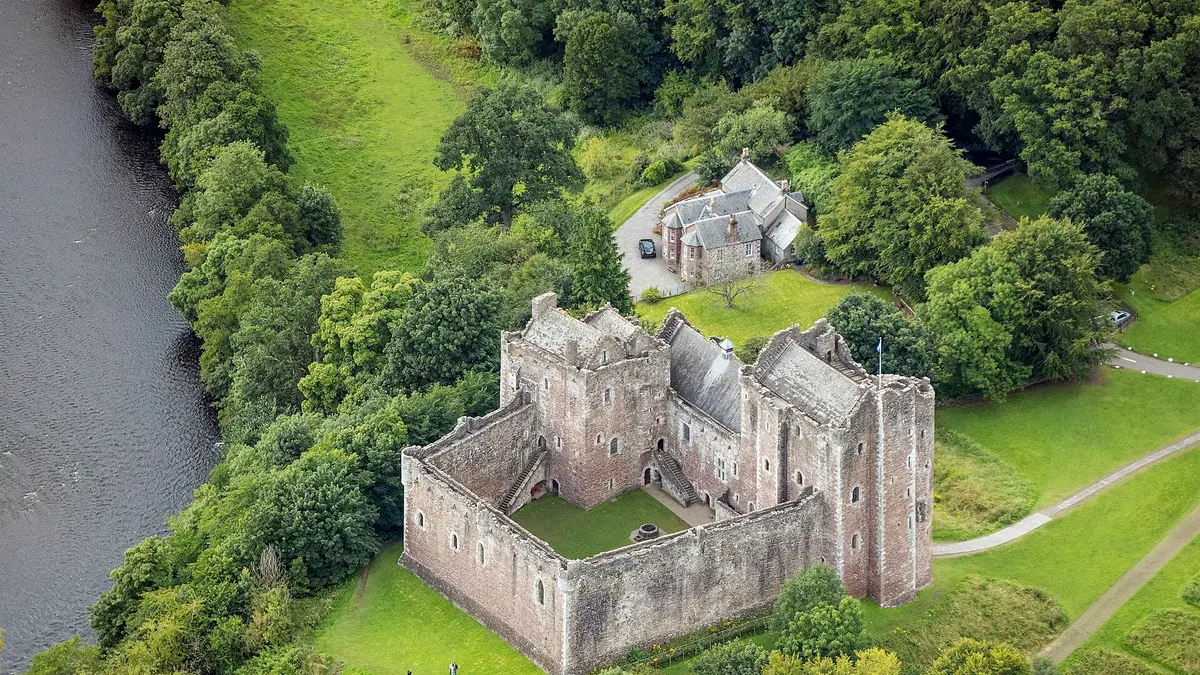
Doune Castle plays Castle Leoch, home of the MacKenzie clan. Historic Environment Scotland confirms its role in Outlander, and the official audio guide includes Sam Heughan talking about the filming. At the same time, Doune is a genuine medieval fortress with a courtyard, great hall, kitchens and towers. The visit has two layers: you picture the fiction and you see how the building actually worked.
It’s near Stirling and reachable by public transport according to its official listing, though it’s worth checking that day’s connection. From the stop or the parking lot you have to walk up to the castle; HES describes steep, cobbled and uneven stretches and several indoor staircases. If you’re driving, coaches can’t enter the site’s parking lot and have a designated drop-off point in the village. The audio guide is part of the visit; check whether it needs a mobile connection.
Doune also appears in other productions, so anyone who knows Monty Python or Game of Thrones will recognize other uses of the castle. Not everyone has to be an Outlander fan to enjoy it. Leave time to explore at an easy pace and avoid pairing it with several distant attractions on the same day.
4. Blackness Castle: the show’s Fort William
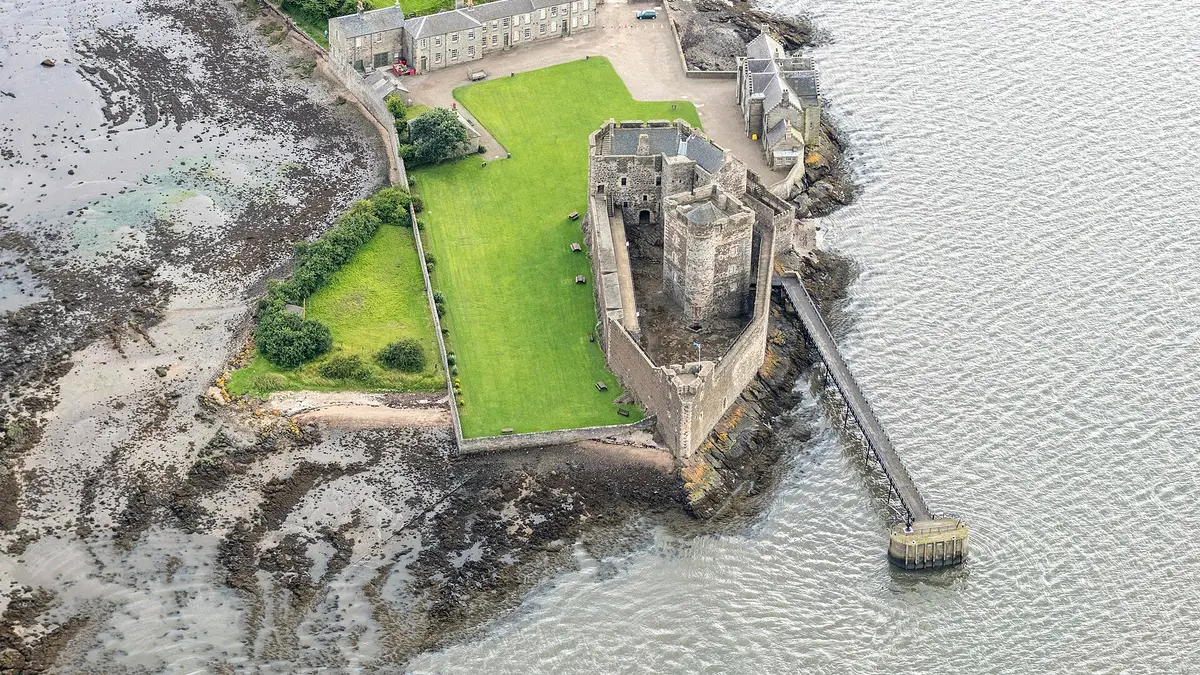
Blackness Castle, on the Firth of Forth, became Black Jack Randall’s Fort William headquarters. Historic Environment Scotland describes it as a 15th-century fortress shaped like a ship, nicknamed “the ship that never sailed”. It has walls, a courtyard and views over the water; its real history includes stints as a fortress and a prison. It’s west of Edinburgh and easier to combine with Hopetoun or Linlithgow than with a full morning in the old town.
The wind and exposure can make the visit feel very different from a city stroll. Check the opening status and any restrictions with Historic Environment Scotland. Don’t assume a castle pass covers every site: check the current terms if you’re comparing tickets.
5. Linlithgow Palace: Wentworth Prison
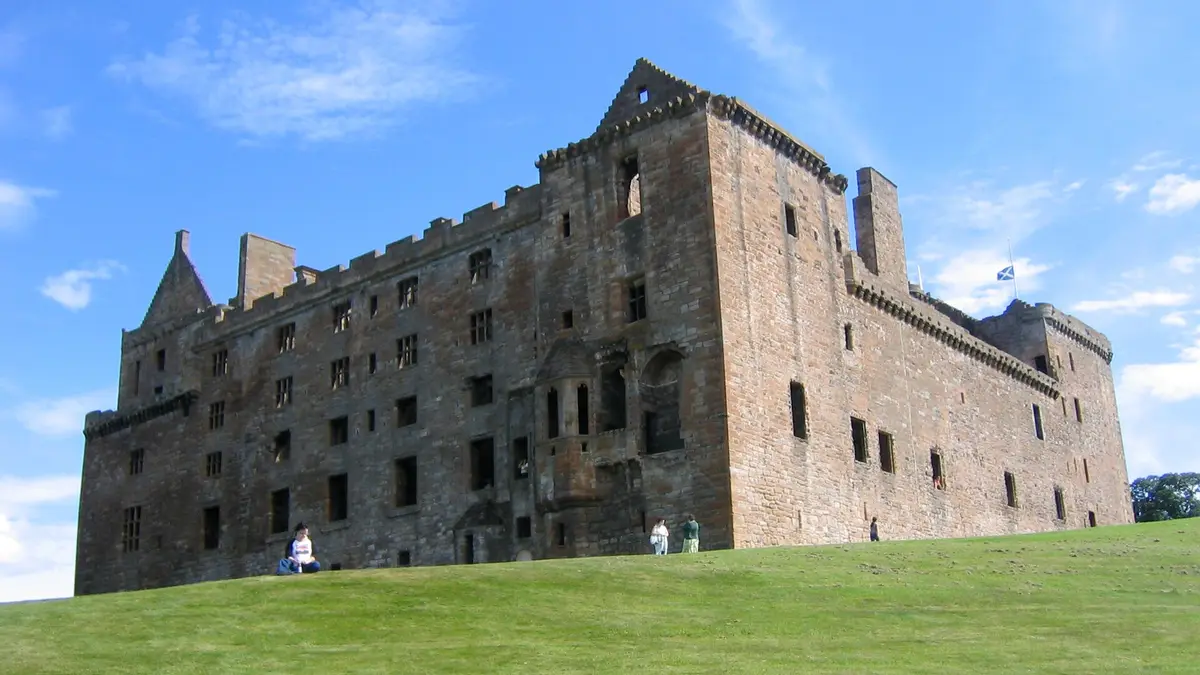
Linlithgow Palace played Wentworth Prison in season one. Its monumental ruin sits by the loch and was a royal residence; Mary, Queen of Scots, was born here. That overlap between fiction and Scottish royalty means the visit works even if you’d rather not relive Jamie’s scene. Linlithgow station has trains from Edinburgh and Glasgow, but check schedules and any palace closures before buying tickets.
Historic Environment Scotland identifies it as a filming location for the series. The site can close or have restricted areas because of conservation, works or events. Check the notice on its listing the week of your trip, and don’t promise the group they’ll be able to see every interior without confirming it.
6. Midhope Castle: Lallybroch, with private access
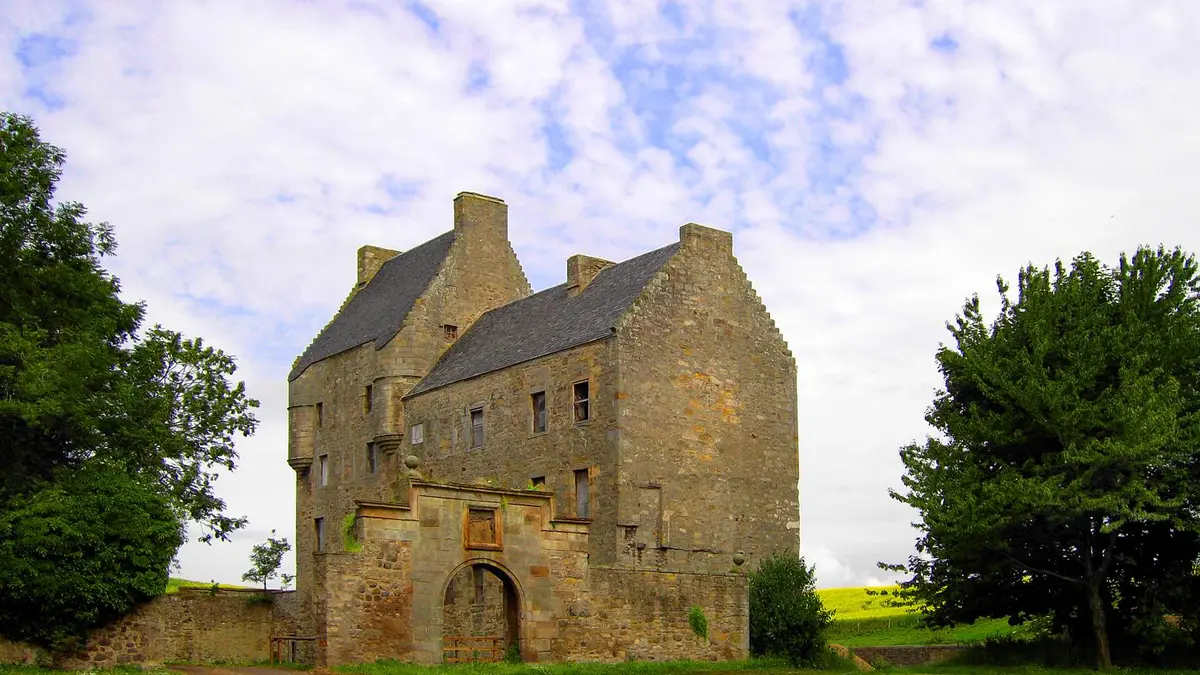
Midhope Castle, on the Hopetoun Estate, is the exterior of Lallybroch, Jamie’s home. This stop needs more planning than a public castle. The estate and Midhope’s official website explain that it’s on private, rural land, that visits depend on authorized dates, that it can close for farm work or estate activities and that you need a ticket and your own or organized transport. The interior is a ruin and wasn’t used for Outlander’s interior scenes.
Don’t count on arriving by taxi without arranging the return, or on walking down any track on the estate. Follow the parking instructions, respect the farm access and check restricted dates directly with Hopetoun. Some guided tours include Midhope, but not every ticket to the house does: check the specific product. If access doesn’t work out, you can enjoy other locations without forcing this stop.
7. Preston Mill, Glasgow and the scenes that complete the route
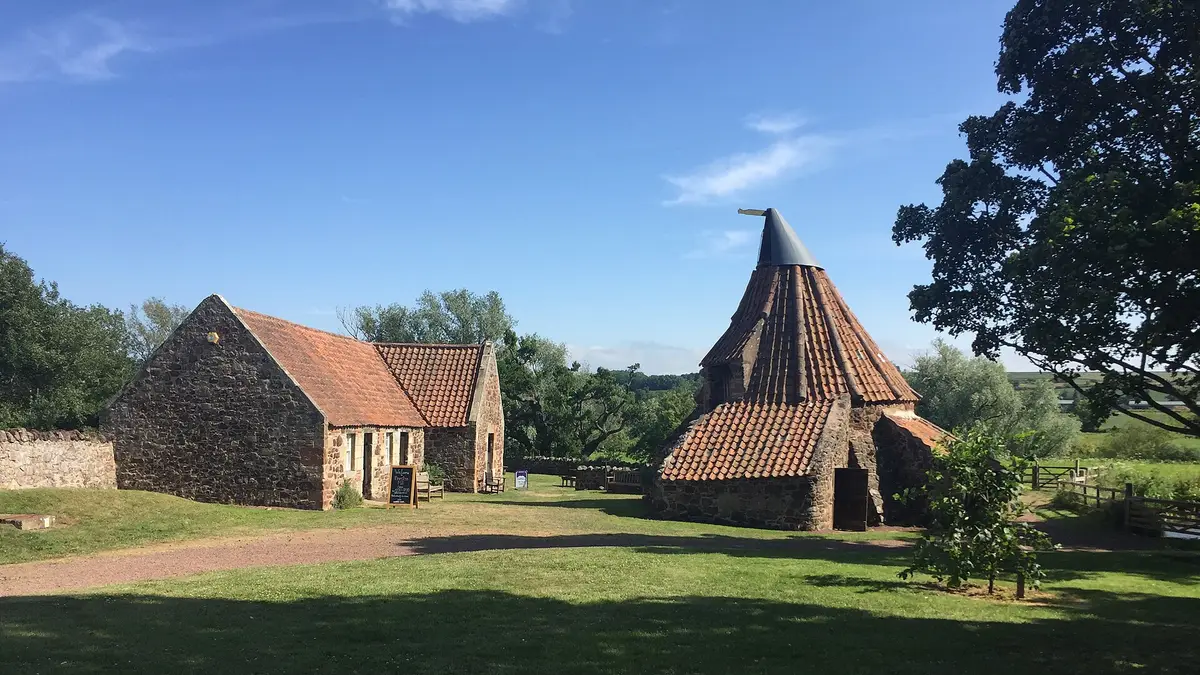
Preston Mill, in East Linton, became the mill on the Fraser estate and was also used for interiors in a courtroom scene. The National Trust for Scotland details the episodes and seasons; check opening times, because a heritage mill can have different hours and accessible areas from a city park. The stop pairs well with a trip toward the East Lothian coast.
In Glasgow, George Square stood in for a 1940s square, and the cathedral crypt appeared as the Paris hospital. The city offers Victorian architecture and facades the production reused to portray other cities. Some locations are recognizable without booking a whole tour. If this area interests you, keep it separate from the Fife and Stirling circuit so you don’t cross Scotland several times.
Glen Coe appears in the opening titles, according to VisitScotland’s guide. Culloden has real historical significance, though it wasn’t where the show’s battle was filmed: the set was recreated elsewhere. Visiting Culloden gives you the context of 1746 that the series dramatizes, but it’s best explained as history and memory, not as the battle set.
An Outlander route in three, five or seven days
For a first route, group nearby locations and use Edinburgh or Glasgow as your initial base. VisitScotland offers a twelve-day itinerary around the country; you don’t need to complete it to see several key locations. Fit the route to the monuments’ opening hours and Midhope’s access rather than trying to cover dozens of spots.
In three days: a selection from Edinburgh
- Day 1: Edinburgh. Explore the center and the city locations you can reach on foot. See our Edinburgh in three days guide to fit them around other plans.
- Day 2: Fife. Spend the day on Culross and Falkland. Check the palace, garden and transport schedules; don’t add Doune if it means rushing.
- Day 3: Stirling and the Forth. Choose Doune or the Blackness–Linlithgow pair. Only add Midhope if access is confirmed and transport is sorted.
In five days: villages, castles and Glasgow
- Day 1: Edinburgh and its historic streets.
- Day 2: Blackness Castle and Linlithgow Palace, by train or tour depending on schedules.
- Day 3: Culross and Falkland, leaving time to walk and go into the palace if it’s open.
- Day 4: Doune Castle and Stirling, without stacking too many tickets on the same day.
- Day 5: Glasgow: the cathedral, George Square and the West End areas linked to period scenes.
If the north appeals, swap part of the city plan for two nights in Inverness or Fort William and add Culloden, Clava Cairns or Glen Coe. A week or more lets you link the central belt with the Highlands; VisitScotland’s twelve-day route works for planning a road trip.
On your own, by public transport or with a tour
Going on your own gives you freedom to choose how long to spend at each place, but not every location is next to a station. Edinburgh, Glasgow, Linlithgow and Stirling have useful rail connections; for Falkland, Culross, Blackness, Preston Mill and Midhope you need to check the last stretch and the return times. A day with infrequent buses can turn out worse than an organized tour.
A tour can bring castles and villages together in one day, handle driving on the left and explain which scene matches each place. Before buying, check the language, group size, included tickets, free time, departure point and whether Midhope is confirmed. “Outlander tour” doesn’t mean it includes every famous location.
If you’re driving, don’t schedule more than two or three ticketed visits a day. Factor in traffic, parking and the walk between car and monument. For each booking, note who buys, whether the ticket is refundable and the deadline to change it. In Youtopia you can vote on which areas interest you, put confirmed times in the itinerary and split fuel, tickets and accommodation.
Split the locations by area, share the schedules and assign who books each visit. That way the trip doesn’t depend on a single person.
Try it freeI’d choose a base in Edinburgh or Glasgow for the first part and, if you head north, another in Inverness or Fort William. You can compare places to stay in Edinburgh on Booking.comAffiliate link: Youtopia may earn a commission if you book, at no extra cost to you. or search in Glasgow depending on your airport and connections. Check parking and the distance to the station; don’t plan Midhope as if it were a city stop with plenty of taxis.
Fun facts to see the locations with fresh eyes
- Falkland became an Inverness from two different eras; Culross was Cranesmuir and came back in several seasons.
- In Culross, some facades were temporarily repainted for filming; the village later returned to its historic look.
- Doune Castle appears in other productions, and the official audio guide includes Sam Heughan’s memories of Outlander.
- Blackness Castle is nicknamed “the ship that never sailed” because of its silhouette on the firth, and in the fiction it was Fort William.
- Clava Cairns is around four thousand years old and a real burial monument; it isn’t the artificial circle from the time travel.
- The production reused Scottish places to portray other countries and cities. The facade isn’t always in the city the story shows.
What to check before locking in the trip
- Check each monument’s official listing when you book, and again before you set off.
- Check which castles accept passes and which tickets are sold separately.
- Confirm Midhope’s dates, its private estate rules, the ticket and the authorized parking.
- If you’re traveling by bus or train, save your return and an alternative; don’t rely on unconfirmed connections.
- Wear shoes with good grip for cobbled streets, ruins, slopes and country paths.
- In lived-in villages, avoid photographing windows, yards or people without permission.
Outlander’s Scotland beyond the series
A themed route can be a great way into Jacobite history, but fiction condenses people, places and events. At Culloden, for example, the battlefield is a memorial and a historic site, not a set to look for the actors. The visit helps you understand the consequences of the conflict the series portrays; it deserves a respectful tone, especially when walking through the marked areas and memorials.
The villages and castles aren’t empty backdrops either. Culross has residents and businesses; Falkland is a living community; Midhope is on a working estate. Make way in the streets, don’t use private gardens for photos and follow staff instructions. If you’re traveling at busy times, getting up early can help you walk around more calmly, though interior opening depends on the official calendar.
How to choose your route based on the seasons you remember
If you’re most interested in the beginning of the story, prioritize Falkland, Culross and Doune. To follow the later conflicts, add Blackness and Linlithgow. If you want landscapes, look at Glen Coe, Culloden and the area around Inverness, but tell apart the places that inspired the story from those that were actual sets. VisitScotland’s official map and the National Trust’s guide detail seasons and scenes; use those resources to choose instead of chasing every pin on an old map.
The series ended in 2026, and the official guide covers all eight seasons. Older articles are still useful for a classic route, but they may only describe the early seasons or access rules that have changed. For opening hours and permissions, the site owner’s page outranks any filming list. Also check whether the guided tour you’re interested in covers the season or castle you’re after; a “complete” guide doesn’t mean every site is open to the public.
For a trip with friends, start by choosing a shared motivation: photography, castles, history or walks. Then pick two or three locations everyone wants to see and leave the rest as optional. That way, anyone who doesn’t follow the show can enjoy a palace, a historic village or a walk without feeling they’re paying for a whole trip for a single scene.
Tally up the costs separately: transport to each area, tickets, guided visits and food. Some days combine a paid palace with a free stroll around the village; others require a car or a tour to reach a rural site. With those figures, each person can say what interests them without the conversation boiling down to “let’s see everything”. A vote makes clear which stops are essential and which can go if the time or schedule changes.
Group the locations by region so the fiction doesn’t send you in circles
VisitScotland’s Outlander locations page covers all eight seasons and separates castles, villages, landscapes and buildings. Its downloadable map covers seasons one to four, so don’t treat it as a complete inventory of the series. The website lets you explore locations from later seasons. Before adding a stop, confirm which scene was filmed there and which part is open: a filming listing isn’t the same as a site you can visit.
If you have three days: prioritize stops near Edinburgh
On a short break, spend one day in the old town and save another for a guided tour of the best-known castles and villages. The third day can be Culross and Doune or a trip to Falkland, depending on transport and interests. Check the palaces’ entry times separately: the village may be open while the monument’s interior is closed. If you want to visit Midhope, check the authorized date and buy the right ticket before driving to the estate. Don’t treat it as a quick photo at the gate.
If you have five days: add Glasgow and a day without locations
With five days you can add Glasgow to see the streets and buildings that stood in for other cities, and spend more time at the Stirling and Fife sites. Keep one day with no filming goal: wander, eat at a relaxed pace or visit a museum. That pause protects the trip if it rains, a train is delayed or a castle doesn’t open. It also lets the person least interested in the show feel part of the plan. The route works best when every stop is worthwhile in itself, even for someone who doesn’t recognize the shot.
What happens at each stop and what you can really see
Midhope Castle needs particular care with logistics. The estate is private and working, and visits depend on authorized days, tickets and the owner’s rules. Check Hopetoun Estate’s information before planning your arrival, including parking conditions and possible closures. Don’t assume you’ll be able to go inside: the Lallybroch experience is mostly about the exterior. If there’s no access on your dates, don’t look for another way in or park on working tracks; swap the stop for Blackness or a city visit.
How to choose between a guided tour and going on your own
By public transport you can reach several towns, but the last stretch to rural castles may require a taxi, a local bus or a walk. Check the return connection before leaving Edinburgh, and don’t assume a car will be available when you arrive. Frequencies change by day and season. If there are several of you, compare the total cost of tickets and taxis with a tour or a rental car, including parking and fuel. Keep an alternative in case the last service doesn’t line up with the monument’s opening hours.
FAQ
Where was Outlander filmed in Scotland?
The best-known locations include Falkland, Culross, Doune Castle, Blackness Castle, Linlithgow Palace, Midhope Castle, Preston Mill, Glasgow and Glen Coe. The real place doesn’t always match the city shown on screen.
Can you visit Craigh na Dun?
The stone circle in the series was a set and doesn’t exist as an attraction. Clava Cairns is a real prehistoric site that brings the fiction to mind, but it isn’t the set.
Can you go inside Lallybroch?
The exterior is Midhope Castle, on a private estate. Access depends on authorized dates and a ticket; the interior is a ruin and wasn’t used for interior scenes.
How many days do I need to see the locations?
With three days you can see a selection around Edinburgh. Five days let you add Glasgow and more castles; a week or more helps you combine the central belt with the Highlands and Inverness.
Are there guided Outlander tours?
Yes, several operators run Outlander tours, but the offer, dates and stops change. Check the guide’s language and the locations included before booking.
Near Edinburgh
If you have a spare day or want to combine two places in one trip.
Plans you can copy ready for your trip.
Day-by-day itineraries from our guides, with the route for each day, times and prices. Copy them into the app and change them together.
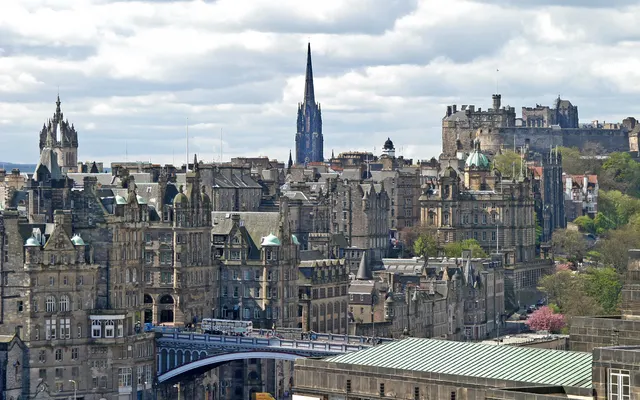 Edinburgh3 days · from 2 to 4
 Dublin3 days · from 2 to 4
 London3 days · from 2 to 5
 Amsterdam3 days · from 2 to 5
 Paris3 days · from 2 to 5
 Berlin3 days · from 2 to 5
 Prague3 days · from 2 to 5

Pick the type of trip, the pace and the budget, and Yupi builds the plan with real places. Then you vote and log the expenses. Free.
Photo credits
Cover: PaulT (16:9 crop, converted to WebP) · Wikimedia Commons (CC BY-SA 4.0)
Falkland Palace: Stephencdickson · Wikimedia Commons (CC BY-SA 4.0)
Culross: Michael Garlick · Wikimedia Commons (CC BY-SA 2.0)
Doune Castle: Godot13 · Wikimedia Commons (CC BY-SA 4.0)
Blackness Castle: Godot13 · Wikimedia Commons (CC BY-SA 4.0)
Linlithgow Palace: Alistair McMillan · Wikimedia Commons (CC BY-SA 2.0)
Midhope Castle: Camer01 · Wikimedia Commons (CC BY-SA 3.0)
Preston Mill: Stratos Filalithis · Wikimedia Commons (CC BY-SA 4.0)